For years, leg day was dominated by squats and lunges. Then, an exercise emerged from the research labs and physique camps to claim its throne as the undisputed king of glute development: the hip thrust.
More than just a trend, the barbell hip thrust represents a fundamental shift in how we target the posterior chain. It’s an exercise of precision, power, and profound results. This guide will dissect everything: the compelling science behind its effectiveness, a granular breakdown of perfect form, intelligent variations for every setting, and how to strategically program it for transformative gains.
Whether your goal is athletic power, a stronger physique, or overcoming back pain through robust glute development, mastering the hip thrust exercise is non-negotiable. Let’s build from the ground up.
Part 1: The “Why” – The Science of Superior Glute Activation
Why has this movement become a staple? The evidence is in the electromyography (EMG) data and biomechanics.
The Biomechanical Advantage:
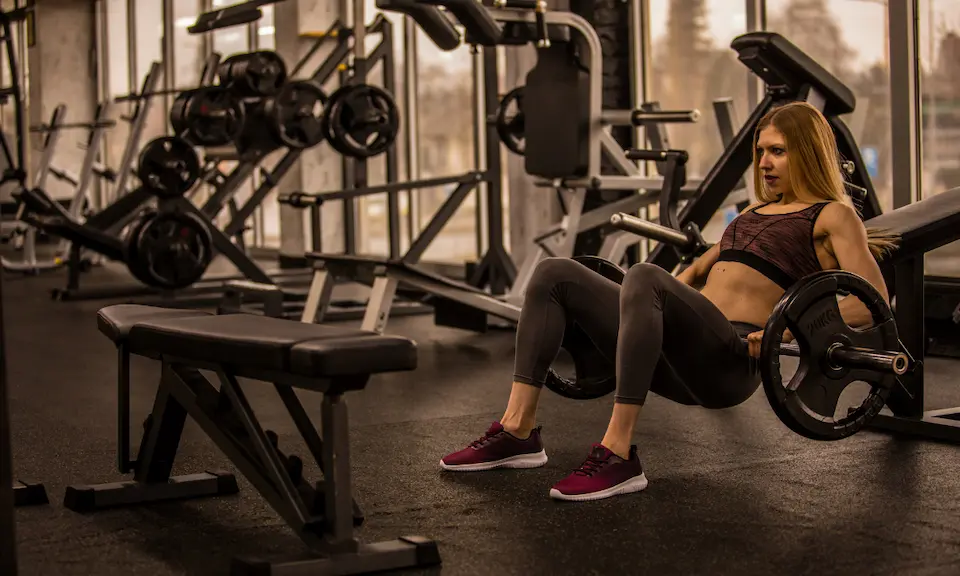
Unlike a squat, where the glutes are stretched at the bottom and must fire hard to reverse the movement, the hip thrust places the glutes in a position of maximal mechanical tension at the peak of contraction (the top of the movement).
Your hips are fully extended while your knees are bent, which isolates the glutes by limiting hamstring involvement. This creates an unparalleled “mind-muscle” connection and growth stimulus.
Documented Benefits:
Part 2: The Master Blueprint – Executing the Perfect Barbell Hip Thrust
Precision here beats brute force. Let’s break down the standard barbell hip thrust.
Equipment Needed: Barbell, weight plates, a padded bench (or stable surface), and a barbell pad or folded yoga mat (non-negotiable for comfort).
Step-by-Step Form:
1. The Setup (The Most Important Part):
- Sit on the floor with your upper back (mid-scapula region) firmly against a bench. Your shoulder blades should be on the bench.
- Roll a loaded barbell over your legs. Position the bar directly over your hips (the crease where your thigh meets your torso).
CRUCIAL TIP: Place your feet flat on the floor, knees bent. Your shins should be vertical at the top of the movement. A common error is placing feet too far forward.
2. The Positioning:
- Grip the bar for stability. Tuck your chin slightly to maintain a neutral spine from your neck to your tailbone.
- Brace your core as if bracing for a punch. Drive your upper back into the bench.
3. The Ascent (The Thrust):
- Drive through your heels and thrust your hips upward toward the ceiling.
- Focus on pushing your hips forward, not just upward. Your body should form a straight diagonal line from your shoulders to your knees at the top.
- Squeeze your glutes as hard as possible at the peak. Imagine holding a coin between them. Your thighs should be parallel to the floor.
4. The Descent (The Control):
- Slowly lower your hips back toward the floor, maintaining tension. Don’t crash down.
- Gently tap the floor (or stop just above it) before beginning the next rep. No bouncing.
Form Cues to Burn Into Your Mind:
- “Lead with the pelvis, not the ribcage.” Prevent hyperextension by focusing on hip movement, not arching your lower back.
- “Chin down, chest up.” This maintains spinal neutrality.
- “Knees out.” Slightly flare your knees outward to enhance glute medius engagement and prevent knee cave.
Related Post

Part 3: The Muscles Worked & The Mind-Muscle Connection
Primary Mover:
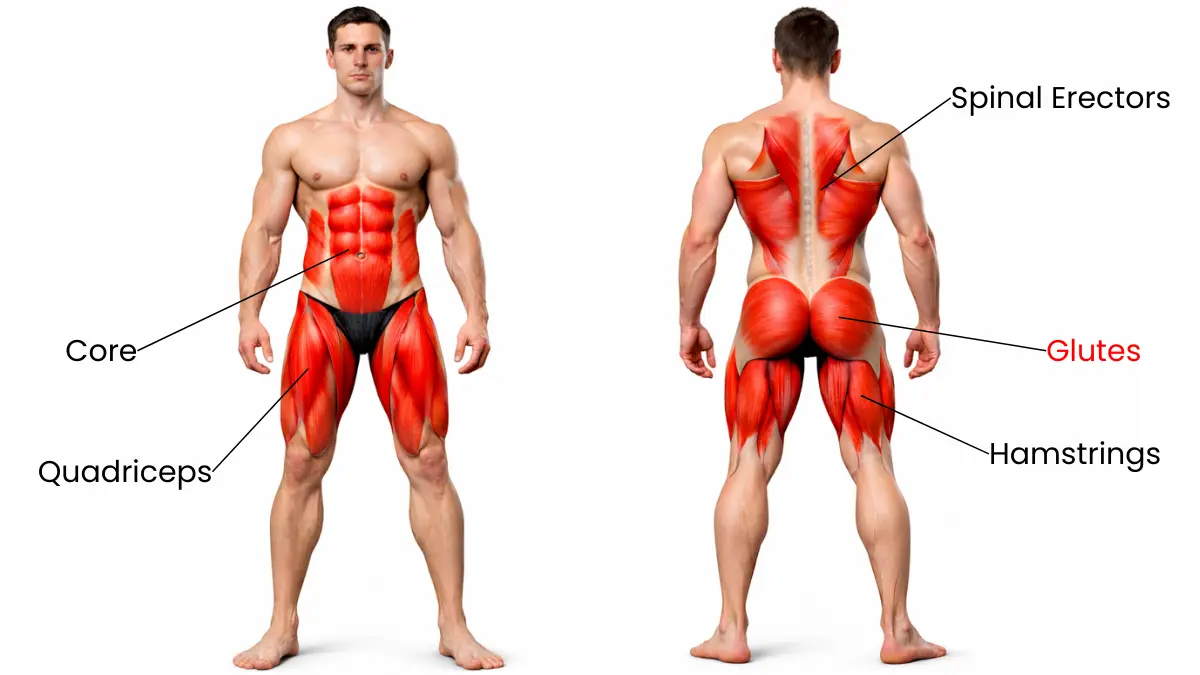
- Gluteus Maximus. This is the exercise’s star. It’s responsible for the powerful hip extension.
Synergists & Stabilizers:
- Hamstrings: Assist in hip extension but are in a shortened position, allowing greater focus on the glutes.
- Gluteus Medius & Minimus: These hip abductors fire intensely to stabilize the pelvis and prevent knee valgus (caving in).
- Core & Spinal Erectors: Your entire abdominal wall and back muscles work isometrically to brace your rigid torso against the bench.
- Quadriceps: Act as stabilizers for the knee joint.
The “Feel” Factor: The unique biomechanics of hip thrusts allow you to load the glutes heavily and feel them working with every rep. This potent combination of mechanical tension and conscious connection is a recipe for rapid development.
Part 4: The Hip Thruster’s Toolkit – Variations for Every Goal & Setting
The standard barbell hip thrust is king, but a full court has many players.
For Beginners & Home Training:
- Bodyweight Hip Thrust: Master the pattern. Focus on a powerful squeeze at the top. Add a pause for time-under-tension.
- Banded Hip Thrust: Place a resistance band above your knees. This dramatically increases glute medius activation throughout the movement, fighting knee cave. The ultimate hip thrust at home upgrade.
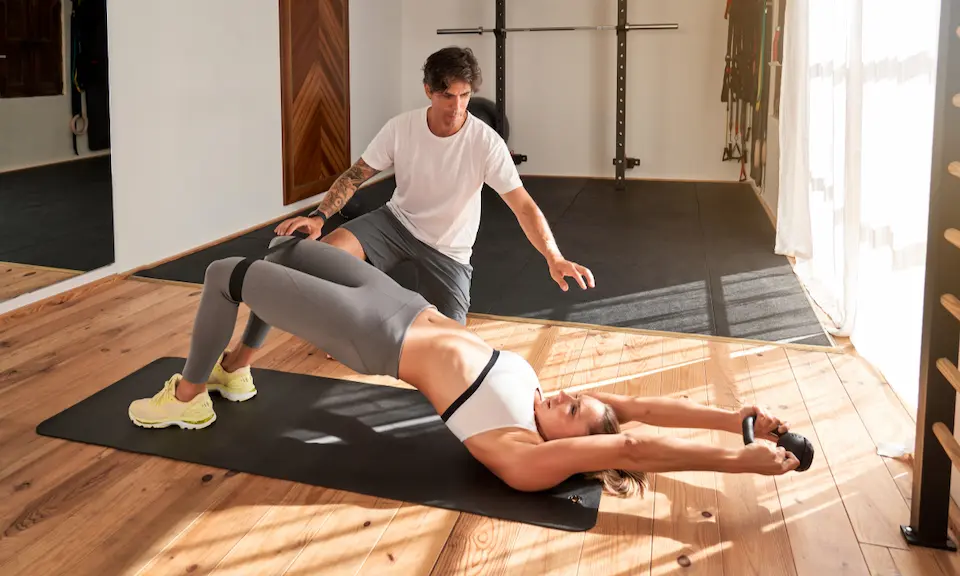
- Single-Leg Hip Thrust: The gold standard for identifying and correcting strength imbalances. Keep the non-working leg extended or bent. This is a humbling and highly effective barbell hip thrusts alternative.
For Advanced Hypertrophy & Strength:
- Banded Barbell Hip Thrust: Combine a barbell with a heavy band attached to the rack and the bar ends. This provides accommodating resistance—the movement gets harder at the top where you’re strongest, maximizing tension.
- Foot-Elevated Hip Thrust: Place your feet on a step or bench. This increases the range of motion and shifts slightly more emphasis to the hamstrings.
- Hip Thrusts Smith Machine: An excellent option for those training alone. The fixed path allows you to focus purely on the contraction without worrying about bar balance. Set the safety pins just below your bottom position for ultimate safety during heavy sets.
For Targeting & Unloading:
- American Hip Thrust: Using a specialized “hip thruster” machine or a bench in a rack, this variation allows the shoulders to roll back at the top, providing an even deeper stretch at the bottom of the movement.
- Kettlebell or Dumbbell Hip Thrust: Ideal for lighter, higher-rep sets or when equipment is limited. Hold the weight on your lap.
Part 5: Programming Your Thrusts – From Activation to Overload
Placement in Your Workout: For strength, do them fresh at the start of your lower body day. For hypertrophy, they can be a potent “finisher” after your main compounds.
Rep Ranges & Intent:
- Glute Activation: 1-2 light sets of 15-20 reps as a warm-up.
- Strength: 3-5 sets of 3-8 reps with heavy weight (2-3 min rest).
- Hypertrophy: 3-4 sets of 8-15 reps with moderate weight (60-90 sec rest). Focus on the peak squeeze.
Progress Intelligently: Add weight incrementally. As it gets heavy, prioritize form and the lockout squeeze over ego-lifting. Using a mini-band throughout your working sets is a powerful progressive overload tool that doesn’t require more plates.
Frequently Asked Questions
The hip thrust is more than an exercise; it’s a statement of intent. It declares that you are training intelligently, leveraging biomechanics, and refusing to neglect a fundamental pillar of strength and aesthetics.
Mastering this movement—from the meticulous setup to the explosive, controlled contraction—builds more than muscle. It builds resilience, enhances performance, and corrects the imbalances of modern life. Start light, be patient with the learning curve, and prioritize the quality of contraction over the weight on the bar.
The results—in strength, shape, and function—speak for themselves. Now, get set up, brace hard, and thrust your way to a stronger foundation.