The thought of a New Year’s fitness resolution is both exhilarating and utterly daunting. We start with a burst of motivation, only to see it fizzle out by February. I’ve been there more times than I can count.
What changed everything for me wasn’t a vague goal but a specific, structured plan—a 30 day fitness challenge. This isn’t about punishing yourself; it’s about building a sustainable, powerful habit that reshapes your body and your mindset.
I created this comprehensive 30 day workout challenge for beginners to be the roadmap I wish I had. It’s designed to meet you where you are, build you up gradually, and prove to you just how capable you are.
This fitness challenge is your invitation to start strong, build consistency, and discover a stronger version of yourself, one day at a time.
Why a 30-Day Fitness Challenge Works
The magic of a 30 day challenge lies in its psychology and physiology. Thirty days is long enough to see tangible changes in your energy, strength, and endurance, yet short enough to feel immediate and achievable. It transforms exercise from a monumental, scary task into a daily, manageable victory.
This structured 30 day workout program eliminates guesswork, builds discipline, and creates the neural pathways of a lasting healthy habit. Whether your goal is to kickstart a weight loss challenge, build foundational strength, or simply prove to yourself that you can, this framework is your proven starting point.
The Foundational Principles of This Challenge
Before we dive into the daily workouts, let’s set the ground rules for success. This challenge fitness philosophy is built on three pillars:
- Progression Over Perfection: The intensity builds gradually over four weeks. Start where you are, not where you think you should be.
- Listen to Your Body: Soreness is expected; sharp pain is not. The program includes essential rest and active recovery days.
- Consistency is King: Showing up for 20 minutes on a tired day is infinitely more valuable than killing yourself for 90 minutes once a week.
Your Exercise Toolkit
This 30 day exercise challenge uses a set of foundational bodyweight and simple equipment exercises. Mastering proper form is crucial to prevent injury and maximize results.
Bodyweight Essentials:
- Squats: The king of lower-body exercises. Stand with feet shoulder-width apart, send your hips back and down as if sitting in a chair, keep your chest up, and lower until your thighs are at least parallel to the floor. Drive through your heels to stand.
- Push-Ups: A full-body strength builder. Start in a high plank, hands under shoulders. Lower your body until your chest nearly touches the floor, keeping your core tight and your body in a straight line. Modify on your knees if needed.
- Planks: The ultimate core stabilizer. Support yourself on your forearms and toes, your body forming a straight line from head to heels. Engage your abs and glutes, and hold without letting your hips sag.
- Lunges: Great for balance and leg strength. Step forward with one leg, lowering your hips until both knees are bent at about 90 degrees. Your front knee should be above your ankle, and your back knee should hover just above the floor.
- Glute Bridges: Essential for posterior chain health. Lie on your back with knees bent and feet flat. Drive through your heels to lift your hips toward the ceiling, squeezing your glutes at the top.
Related Post

With Minimal Equipment (Dumbbells/Resistance Bands):
- Dumbbell Rows: For a strong back. Place one knee and hand on a bench, back flat. Hold a dumbbell in the other hand, pull it towards your hip, squeezing your shoulder blade.
- Overhead Press: For shoulder strength. Hold dumbbells at shoulder height, press them directly overhead until your arms are straight, then lower with control.
- Resistance Band Rows: Anchor a band in front of you, hold the ends, and pull towards your torso, squeezing your back.
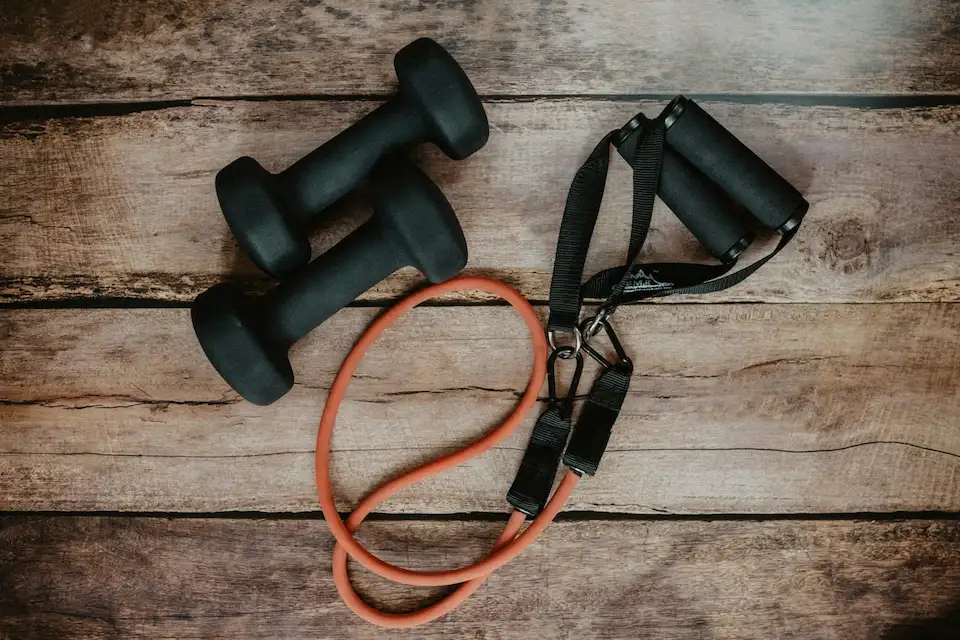
Having the right basic equipment can make this fitness challenge more effective and enjoyable. A versatile set of Adjustable Dumbbells saves space and allows for progression.
A High-Density Exercise Mat is essential for comfort during floor exercises, and a set of Resistance Bands with Handles offers endless workout variations.
The 30-Day Fitness Challenge Calendar
This is your day-by-day blueprint. Each workout can be done in 25-40 minutes. Always warm up with 5 minutes of light cardio (jogging in place, jumping jacks) and dynamic stretches (leg swings, arm circles). Cool down with 5 minutes of static stretching.
Week 1: Foundation & Activation
Goal: Learn movement patterns, establish mind-muscle connection, and build the habit.
Day 1: Full-Body Introduction
- Workout Structure: 3 Circuits. Rest 60 seconds between circuits.
- Circuit 1:
- Bodyweight Squats: 10 reps
- Knee Push-Ups: 5 reps
- Plank: Hold for 20 seconds
- Glute Bridges: 10 reps
- Circuit 2 & 3: Repeat Circuit 1.
- Daily Note: Focus on feeling the right muscles work. Go slow.
Day 2: Active Cardio
- Workout: 20 minutes of steady-state cardio.
- Options: Brisk walking, cycling, elliptical, or swimming. Maintain a pace where you can talk, but not sing.
Day 3: Lower Body Focus
- Workout Structure: 3 Sets of each exercise. Rest 45 seconds between sets.
- Set 1, 2, & 3:
- Alternating Forward Lunges: 10 reps per leg
- Bodyweight Squats: 12 reps
- Calf Raises: 15 reps
- Plank: Hold for 30 seconds
Day 4: Active Recovery & Mobility
- Workout: 20 minutes of focused recovery.
- Routine: Follow a gentle yoga flow on YouTube or perform: Cat-Cow (10 reps), Child’s Pose (1 min), Seated Forward Fold (1 min per leg). Thread the Needle (30 sec per side). Use a High-Density Foam Roller on major muscle groups.
Day 5: Upper Body & Core
- Workout Structure: 3 Circuits. Rest 60 seconds between circuits.
- Circuit 1:
- Incline Push-Ups (hands on a sturdy table or bench): 8 reps
- Dumbbell Rows (use a milk jug or resistance band if no dumbbell): 10 reps per arm
- Side Plank: Hold for 15 seconds per side
- Lying Leg Raises: 10 reps
- Circuit 2 & 3: Repeat Circuit 1.
Day 6: Fun Cardio
- Workout: 25 minutes of enjoyable movement.
- Options: A nature walk, a dance workout video, or playing a sport like basketball.
Day 7: Complete Rest
- Activity: Prioritize sleep, hydration, and nutritious food. Your body repairs itself here.
Week 2: Building Consistency
Goal: Slightly increase volume, introduce “supersets,” and improve work capacity.
Day 8: Full-Body Circuit
- Workout Structure: 4 Circuits. Rest 75 seconds between circuits.
- Circuit:
- Bodyweight Squats: 12 reps
- Push-Ups (standard or knee): 8 reps
- Reverse Lunges: 10 reps per leg
- Plank: Hold for 45 seconds
Day 9: Cardio Intervals
- Workout Structure: Interval training for 25 minutes.
- Routine: Warm up for 5 mins. Then, alternate between 3 minutes of brisk walking and 1 minute of high-intensity effort (e.g., fast run, jumping jacks, burpees). Repeat 5 times. Cool down for 5 mins.
Day 10: Strength & Stability
- Workout Structure: 3 Supersets. Rest 60 seconds after each superset pair.
- Superset A (Do back-to-back, then rest):
- Goblet Squats (hold a dumbbell or kettlebell at chest): 12 reps
- Resistance Band Rows: 15 reps
- Superset B (Do back-to-back, then rest):
- Glute Bridges (hold at top for 2 seconds): 15 reps
- Bird-Dog (focus on balance): 10 reps per side
Day 11: Active Recovery
- Workout: Repeat the mobility routine from Day 4. Add extra focus on any tight areas.
Day 12: Pyramid Challenge
- Workout Structure: Ascending/Descending ladder. Rest as needed.
- Routine: Perform 1 rep of each: Squat, Push-Up, Lunge (per leg), Sit-Up. Then 2 reps of each. Then 3, 4, up to 5. Then go back down: 4, 3, 2, 1.
Day 13: Steady-State Cardio
- Workout: 35 minutes of continuous, moderate-effort cardio. Track your distance or steps with a simple fitness tracker to measure progress.
Day 14: Complete Rest
Week 3: Increasing Intensity
Goal: Introduce density training (more work in less time) and compound movements.
Day 15: Full Body EMOM
- Workout Structure: EMOM (Every Minute on the Minute) for 18 minutes.
- Routine: Set a timer. At the start of Minute 1: Do 15 Air Squats. Rest for the remainder of the minute. At the start of Minute 2: Do 10 Push-Ups. Rest. Minute 3: Do 20 Mountain Climbers (total). Rest. Repeat this 3-exercise cycle 6 times total.
Day 16: Cardio & Core
- Part 1: 25 minutes of steady-state cardio (jog, row, bike).
- Part 2: Core Circuit (3 rounds, rest 30 sec between rounds):
- Russian Twists: 20 reps (total)
- Bicycle Crunches: 15 reps (per side)
- Plank with Shoulder Taps: 20 reps (total)
Related Post

Day 17: Lower Body Burn
- Workout Structure: 4 Sets of each exercise. Rest 60 seconds between sets.
- Set:
- Dumbbell Romanian Deadlifts: 12 reps
- Walking Lunges: 10 reps per leg
- Dumbbell Calf Raises: 20 reps
- Wall Sit: Hold for 45 seconds

Day 18: Active Recovery
- Workout: Focused foam rolling and deep stretching. Hold each stretch for 45 seconds.
Day 19: Upper Body Strength
- Workout Structure: 4 Supersets. Rest 90 seconds after each superset.
- Superset A:
- Dumbbell Bench Press (or Floor Press): 10 reps
- Bent-Over Dumbbell Rows: 10 reps
- Superset B:
- Overhead Dumbbell Press: 8 reps
- Bodyweight Tricep Dips (on chair): 12 reps
Day 20: Endurance Cardio
- Workout: 40 minutes of your favorite sustained cardio activity. Try a new route or trail.
Day 21: Complete Rest
Week 4: Peak Performance & Finish Strong
Goal: Test your new fitness with more complex workouts and maximize effort.
Day 22: The Full-Body Gauntlet
- Workout Structure: 5 Rounds For Time. Record your finish time.
- Round:
- 15 Air Squats
- 10 Push-Ups
- 20 Alternating Lunges
- 15 Sit-Ups
- Note: Pace yourself. The goal is to complete it, not to burn out on round one.
Day 23: High-Intensity Interval Training (HIIT)
- Workout Structure: 30/30 Intervals for 20 minutes.
- Routine: After warm-up, perform 30 seconds of MAX EFFORT (sprints, burpees, jump squats), followed by 30 seconds of complete rest. Repeat for 20 cycles. A interval timer gym clock is perfect for this.
Day 24: Total Body Strength Complex
- Workout Structure: 3 Giant Sets. Rest 2 minutes between each giant set.
- Giant Set (Complete all exercises before resting):
- Dumbbell Thrusters (squat + press): 8 reps
- Renegade Rows (with dumbbells): 6 reps per arm
- Alternating Lateral Lunges: 10 reps per leg
- Plank: Hold for 60 seconds

Day 25: Active Recovery
- Workout: Gentle movement—a leisurely walk or a restorative yoga session.
Day 26: AMRAP Test
- Workout Structure: AMRAP (As Many Rounds As Possible) in 15 minutes.
- Round:
- 10 Dumbbell Goblet Squats
- 8 Dumbbell Floor Presses
- 12 Leg Raises
- Note: Count your total completed rounds and partial rounds. You’ll beat this score if you repeat the challenge!
Day 27: Long, Slow Distance
- Workout: 50-60 minutes of low-intensity cardio. This is for mental endurance and fat oxidation. Enjoy a podcast or audiobook.
Day 28: Complete Rest
- Activity: Prepare mentally and physically for your final test days.
Day 29: Benchmark Retest
- Workout: Repeat the Day 1 workout exactly.
- Note: Feel the difference! You will be faster, stronger, and your form will be crisper. This is your tangible proof of progress.
Day 30: Celebration & Reflection Workout
- Workout: Choose your favorite workout from the past 29 days or try a new fitness class (in-person or online).
- Task: Write down three non-scale victories you achieved during this 30 day workout challenge.
The Critical Role of Recovery & Nutrition
You cannot out-train poor recovery or nutrition. This is especially true during a dedicated weight loss challenge or intense 30 day workout challenge.
Active Recovery:
Days marked for active recovery are non-negotiable. They promote blood flow to repair muscles without strain. Try a foam roller to alleviate muscle tightness; the TriggerPoint GRID Foam Roller is a fantastic tool for this.
Fueling Your Challenge:
Think of food as your workout’s foundation.
- Protein: Essential for muscle repair. Aim for a source with each meal (chicken, fish, eggs, legumes, tofu).
- Complex Carbohydrates: Your primary energy source. Focus on whole grains, sweet potatoes, oats, and fruits.
- Healthy Fats & Vegetables: Support hormone function and provide micronutrients. Don’t skip the greens!
- Hydration: Drink water consistently throughout the day. A large, marked water bottle is a simple game-changer. The Hydro Flask 32 oz Wide Mouth Bottle makes tracking intake effortless.
Tracking Your Progress: Beyond the Scale
This fitness challenge is about more than weight. Track these metrics for powerful motivation:
- Performance: Are you doing more reps, lifting heavier, or finishing circuits faster? (Compare Day 1 to Day 29!).
- How You Feel: Energy levels, sleep quality, and mood improvements.
- Measurements: Take chest, waist, hip, and thigh measurements at the start and end.
- Clothing Fit: Notice how your clothes feel.
- Progress Photos: Take front, side, and back photos in consistent lighting on Day 1 and Day 30. The visual change can be astounding.
A good fitness tracker can provide valuable data on your heart rate, activity levels, and sleep, helping you optimize your effort. The Fitbit Charge 6 is a reliable and user-friendly option.
Adapting the Challenge for Your Life
- Too Easy? Add one more round to each circuit, increase your weights, shorten your rest periods, or make exercises more explosive (e.g., jump lunges).
- Too Hard? That’s okay! Reduce the number of rounds, perform all push-ups on an incline, or extend your rest time. The goal is to complete the challenge, not to quit.
- For Teens: This program is an excellent foundation. The focus should always be on form, fun, and building a positive relationship with exercise—never on extreme calorie restriction. Planet Fitness for teens or similar gyms can be a great, low-pressure environment to learn.
This 30-day fitness challenge is more than a set of workouts; it’s a commitment to showing up for yourself. It’s the tool that bridges the gap between intention and action.
I’ve seen this structure transform not just bodies, but confidence and self-belief. You have the plan. You have the knowledge. The only thing left is to start. Day 1 is waiting. Your stronger year begins now.