Your heart pounds as you pull into the parking lot. You sit in your car, watching people walk in with their water bottles and confident strides. They seem like they belong. You? Not so much.
The what-ifs start spinning: What if I don’t know how to use the machines? What if everyone stares? What if I do something wrong and look stupid?
Here’s the truth no one tells you: almost every single person inside that gym has felt exactly what you’re feeling right now. The guy deadlifting 300 pounds? His first day, he was terrified. The woman flowing through yoga poses? She once walked in, turned around, and left without touching a single machine.
Gym anxiety is real. It’s common. And it’s absolutely conquerable.
This guide offers practical gym anxiety tips to transform that knot in your stomach into quiet confidence. These aren’t vague platitudes—they’re actionable strategies used by thousands who’ve walked through those doors and never looked back.
Understanding Gym Anxiety: You’re Not Broken
Let’s normalize this first. Gym anxiety isn’t weakness—it’s your brain trying to protect you from perceived social threat. You’re walking into an unfamiliar environment where you fear judgment. Your amygdala (the brain’s alarm system) interprets this as danger and floods your body with stress hormones.
The result: Racing heart, sweaty palms, shallow breathing, and an overwhelming urge to flee.
This reaction evolved to protect us from predators, not from leg presses. But your brain doesn’t know the difference.
The good news: Your brain can also learn that the gym is safe. Each visit builds new neural pathways that quiet the alarm. The tips for gym anxiety below accelerate this process.
“Anxiety is not a character flaw. It’s a biological response to perceived threat. Understanding this takes the shame out of the equation.”
Tip #1: Reframe Your Mindset (Everyone Started Exactly Where You Are)
Here’s a powerful mental shift: that fit person lifting heavy weights? They didn’t emerge from the womb knowing how to squat. They had a first day. They made mistakes. They felt awkward.
The Mental Exercise:
- Look around and mentally repeat: “Every person here had a day one.”
- When you see someone struggling or resting, remind yourself: “They’re human, just like me.”
- Notice how little people actually pay attention to others. They’re focused on their own workout, their own music, and their own reflection.
The Science: Spotlight effect is a cognitive bias where we overestimate how much others notice us. In reality, most people are too wrapped up in themselves to scrutinize you.
“Comparison is the thief of joy—and the fuel of anxiety. The only person you’re competing with is yesterday’s you.”
Tip #2: Have a Detailed Plan Before You Walk In
Nothing amplifies anxiety in gym settings like wandering aimlessly. When you don’t know what to do next, your brain interprets the uncertainty as danger. Suddenly, every machine looks complicated, and every person looks like a judge.
The Antidote: A written plan.
How to Create Your Plan:
- Choose 3-4 exercises you’re comfortable with (even if that’s just treadmill, one machine, and stretching)
- Write them down in order on your phone or a small notebook
- Watch videos beforehand of proper form so you feel prepared
- Know where each machine is located (walk through the gym during off-hours if needed)
Related Post
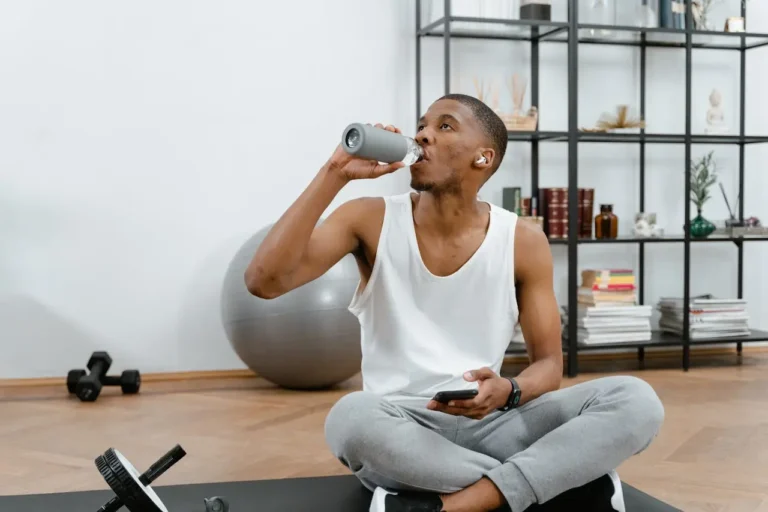
Sample Beginner Plan (30 minutes):
- Treadmill walk: 10 minutes (warm-up)
- Leg press machine: 3 sets of 10 reps
- Seated cable row: 3 sets of 10 reps
- Chest press machine: 3 sets of 10 reps
- Treadmill walk: 5 minutes (cool-down)
- Stretch: 5 minutes
Why This Works: A plan removes decision fatigue. You don’t have to think—just execute. Your brain relaxes because the path is clear.
“Keep your first few workouts stupid simple. Master the basics before adding complexity. Confidence comes from competence.”
Tip #3: Use Strategic Timing to Build Confidence Gradually
You don’t have to jump into prime-time gym hours on your first day. That’s like learning to swim by jumping into the deep end during a storm.
The Timing Strategy:
Week 1-2: Visit during off-peak hours
- Early mornings (before 7 AM)
- Late mornings (9-11 AM)
- Early afternoons (1-3 PM)
These hours typically have fewer people, less noise, and more equipment availability. You can explore without feeling watched.
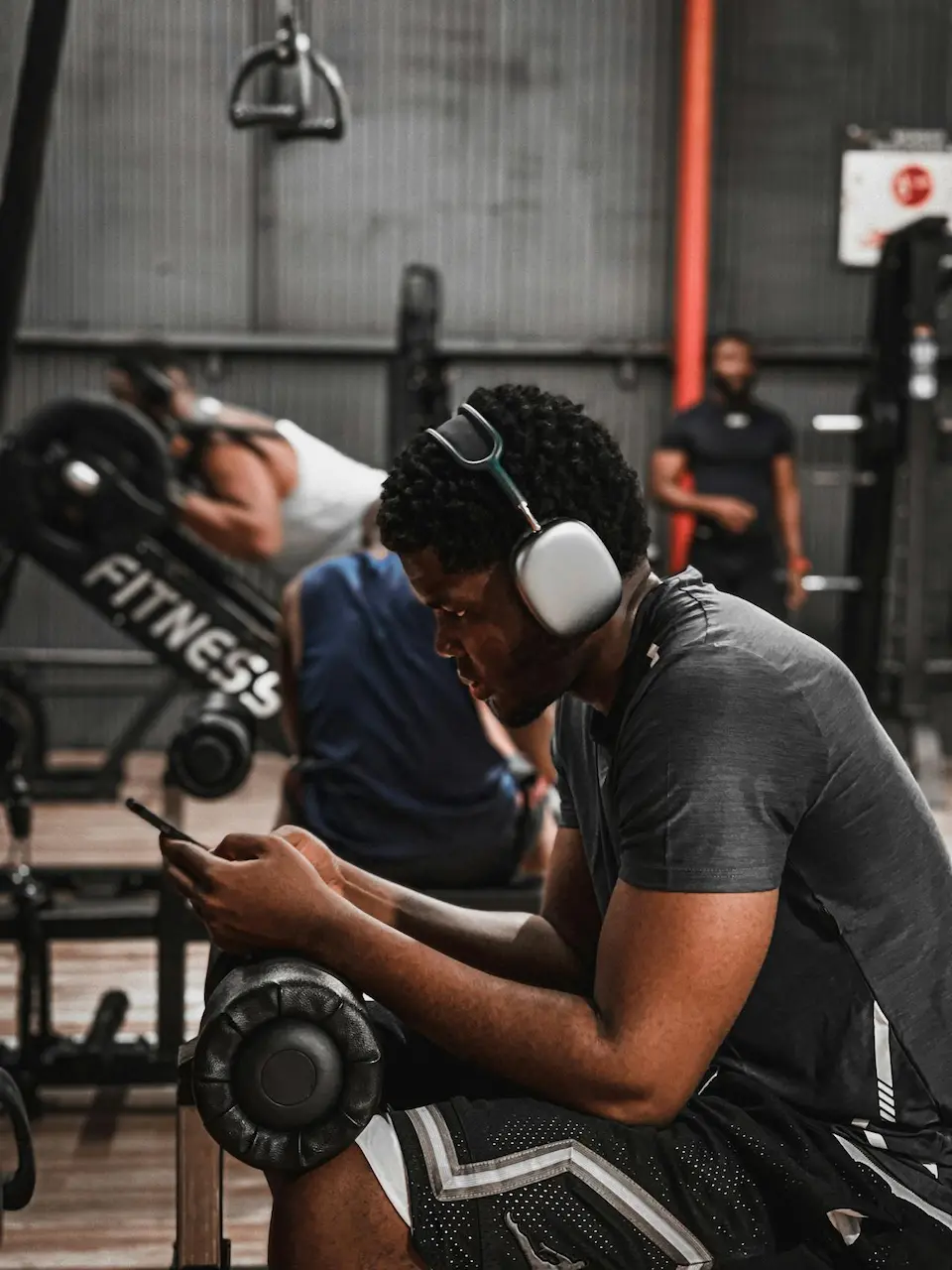
Week 3-4: Gradually edge toward busier times
- Arrive just as the after-work crowd is leaving
- Try a Saturday mid-morning (busy but relaxed vibe)
Week 5+: You’ll notice the crowds don’t bother you anymore. You have your routine. You know where things are. The gym feels like your space.
The Research: Exposure therapy—gradually facing feared situations—is one of the most effective treatments for anxiety. Each successful gym visit builds evidence that nothing bad happens.
Tip #4: Bring a Companion or Armor (Headphones Are Magic)
Social support is a powerful anxiety buffer. Having someone familiar nearby signals safety to your nervous system.
Option A: The Gym Buddy
- Find a friend who’s equally new (you learn together)
- Ask a more experienced friend to show you around
- Hire a personal trainer for 1-3 sessions to learn equipment and build confidence
Option B: The Headphone Shield
Quality headphones aren’t just for entertainment—they’re psychological armor. They:
- Signal to others, “I’m in my own world”
- Give you control over your auditory environment
- Provide motivational music that drowns out anxious thoughts
- Reduce the chance of unexpected interactions
Create Your Ultimate Gym Playlist:
- High-energy songs that make you feel powerful
- Tracks with personal meaning (nostalgia, motivation)
- Enough variety to last your entire workout
“Look for ‘gym anxiety’ playlists on Spotify. Many exist specifically for this purpose, with music chosen to build confidence and block out distractions.”
Tip #5: Talk to Staff and Learn the Space
Here’s a secret weapon against anxiety about going to the gym: the people who work there.
Gym staff are professionally trained to help nervous beginners. They’ve seen every level of fitness, every awkward moment, every confused look. They genuinely want you to succeed.
What to Ask Staff:
- “Can you show me how to adjust this machine?”
- “Is there a quiet time to come?”
- “Can you recommend 3 machines for a complete beginner?”
- “Where’s the least busy area during my workout time?”
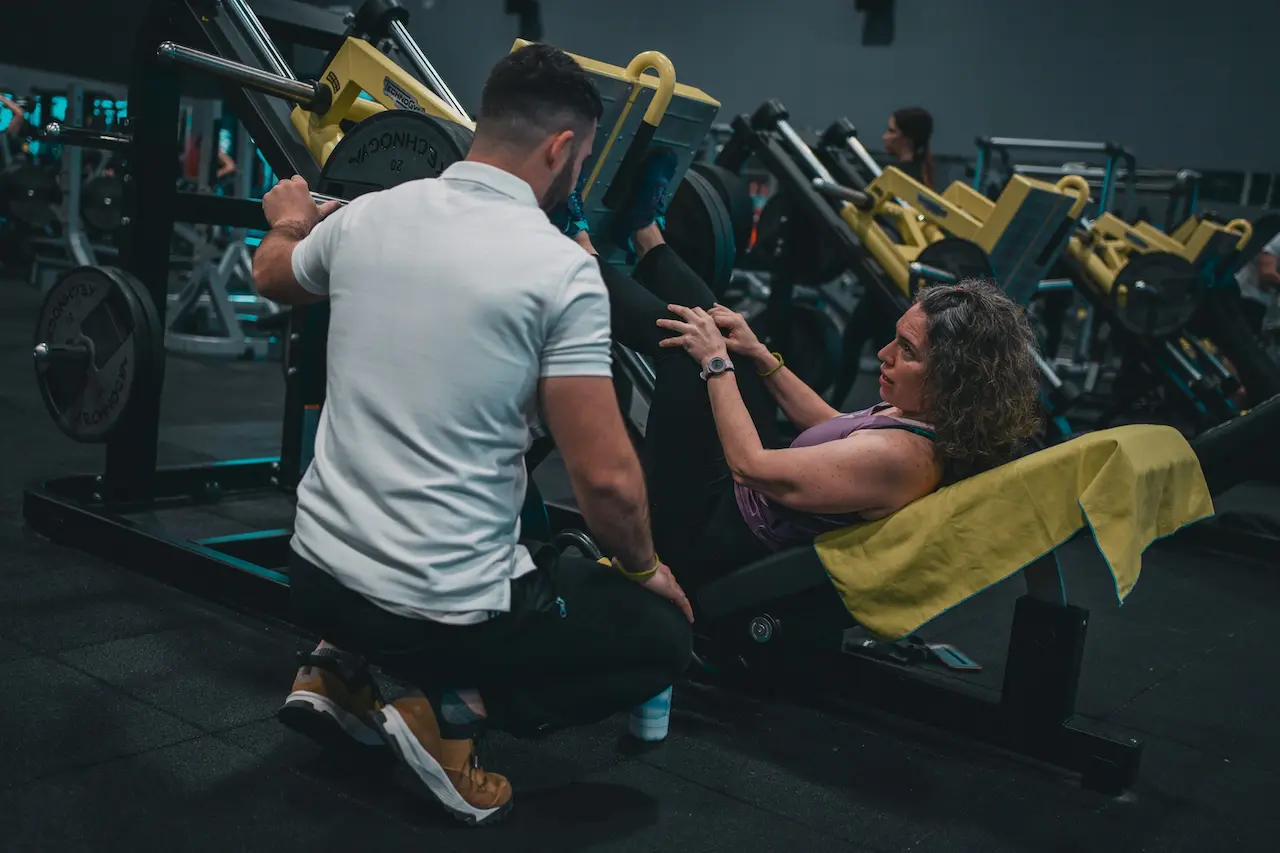
The Tour Strategy:
Ask for a full tour during your first visit. Have them show you:
- Cardio area
- Strength machines
- Free weight section
- Locker rooms
- Water fountains
- Restrooms
Knowing the layout eliminates the “lost and confused” feeling that triggers anxiety.
“Most gyms offer a free orientation session for new members. Take it. Use it. That’s what it’s there for.”
Bonus Strategies: Quick Tools for Acute Anxiety
Sometimes anxiety hits in the moment—as you’re walking in, standing at the door, or facing a crowded floor. These tools work in seconds.
The 5-4-3-2-1 Grounding Technique:
- 5 things you can see (barbells, treadmill, clock, water fountain, exit sign)
- 4 things you can touch (your shirt, your water bottle, the bench, your phone)
- 3 things you can hear (music, machines, people talking)
- 2 things you can smell (your lotion, the gym’s clean scent)
- 1 thing you can taste (your lip balm, water)
This pulls your brain out of anxious future-tripping and into present-moment reality.
Related Post
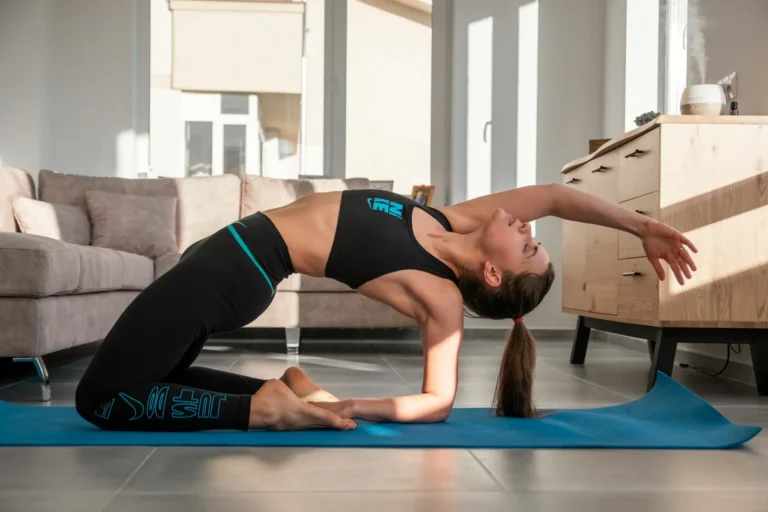
Box Breathing (4-4-4-4):
- Inhale for 4 counts
- Hold for 4 counts
- Exhale for 4 counts
- Hold for 4 counts
- Repeat 3-5 times
This activates the parasympathetic nervous system, physically calming your body.
The 10-Second Rule:
Count to 10 in your head. At 10, take one step forward. That’s it. Just one step. Often, the hardest part is the first 10 seconds of action.
The Confidence Timeline: What to Expect
|
Timeframe |
What Typically Happens |
|---|---|
|
First Visit |
High anxiety. You might not even work out. That’s okay. |
|
Visits 2-5 |
Anxiety decreases. You learn where things are. You complete a full workout. |
|
Visits 6-10 |
You have a routine. You recognize faces. The gym feels familiar. |
|
Visits 11-20 |
You notice progress. You feel comfortable trying new equipment. |
|
Visits 20+ |
The gym feels like home. You walk in without thinking about it. |
Important: Everyone moves at their own pace. Some people feel comfortable by visit 3. Others need 15 visits. Both are normal.
Real Stories: You’re Not Alone
Sarah, 34: “I sat in my car for 20 minutes before my first visit. Almost left three times. I finally walked in, did 15 minutes on the treadmill, and left. Felt like a failure. But I came back. Six months later, I’m there five days a week and actually look forward to it.”
Marcus, 28: “I was convinced everyone was staring at me. Turns out, no one cared. The guy I thought was judging me? He was just zoned out between sets. Now I’m that zoned-out guy.”
Jen, 41: “I hired a trainer for three sessions just to learn equipment. Best money I ever spent. By session four on my own, I knew exactly what to do and felt completely comfortable.”
Frequently Asked Questions
Your First-Day Script (Print This)
Before You Go:
- Pack your bag the night before
- Lay out clothes
- Write down your 3-4 exercises
- Watch one form video per exercise
- Remind yourself: “My only goal is to walk in and do something.”
In the Parking Lot:
- Take 5 deep breaths
- Say out loud: “I belong here. Everyone started somewhere.”
- Grab your bag and walk toward the door without stopping
At the Door:
- Scan your card or check in
- Smile at the front desk person (they’re allies)
- Walk directly to your first exercise (treadmill is perfect)

During Your Workout:
- Follow your written plan
- Keep headphones on if they help
- Remind yourself: “No one is watching me.”
- If anxiety spikes, use 5-4-3-2-1 grounding
After Your Workout:
- Acknowledge what you did: “I showed up. I did the thing.”
- Note one thing that felt okay or good
- Plan your next visit before leaving
The Gym Belongs to You, Too
Here’s the final gym anxiety tip that matters most: the gym is not an exclusive club for the already-fit. It’s a public space for people working on themselves—at every stage of the journey.
The person on the treadmill losing weight. The person on the leg press recovering from injury. The person in the corner stretching after a long day at work. The person deadlifting twice their body weight. All of them are there for the same reason: to become a slightly better version of themselves.
You belong in that group.

Your anxiety about going to the gym is real, but it’s not permanent. Each visit builds evidence that you’re safe, capable, and welcome. Each small win rewires your brain’s response.
Start with a simple plan. Visit during quiet hours. Bring headphones or a buddy. Ask staff for help. Use breathing techniques when anxiety spikes. And most importantly: keep coming back.
One year from now, you’ll walk through those doors without thinking. You’ll nod at familiar faces. You’ll know exactly where the water fountain is and which machine does what. And somewhere in that gym, a new person will be sitting in their car, watching you walk in, thinking you’ve always belonged.
You’ll know the truth. And maybe—just maybe—you’ll smile, remembering exactly how it felt to be them.
Now take a deep breath. Grab your bag. And walk in. The gym is waiting for you.