You follow the programs. You count your reps. You even eat the chicken and broccoli. But something’s off. The guy next to you—the one who seems to move slower and lift less—is somehow growing faster.
What does he know that you don’t?
Probably these seven gym tricks. They’re not the stuff of magazine covers or influencer reels. They’re the subtle, science-backed adjustments that experienced lifters use to squeeze every drop of growth from their time under the bar. These aren’t shortcuts—they’re smarter roads.
Whether you’re looking for gym tricks for beginners or gym tips for muscle gain to break through a plateau, this guide will change how you see every rep, set, and workout.
Trick #1: The “Ladder Method” (More Volume, Less Fatigue)
Think about how you normally train. You jump on a bench, grind out as many reps as possible, rest two minutes, and repeat. By set three, you’re fighting for half the reps you started with.
Now imagine a different approach. One where you actually do more total work in less time, and it feels almost easy. That’s the ladder method.
Ladders were developed by Soviet strength coaches as a secret weapon for athletes who dominated Olympic podiums for decades. Here’s how they work: instead of taking every set to failure, you hold back just enough to keep going.
The Classic Ascending Ladder:
- Do 1 rep, rest briefly
- Do 2 reps, rest briefly
- Do 3 reps, rest briefly
- Continue until you hit 8-10 reps, then start over at 1
The Waving Ladder (Even Sneakier):
Alternate high and low reps to minimize fatigue buildup. For a 1-10 ladder, your sets would go: 1, 10, 2, 9, 3, 8, 4, 7, 5, 6.
The Rule: No set is ever taken to failure. Every rep should be performed with perfect form and explosive intent. If 10 reps is your absolute max on pull-ups, your ladder should only go to 7 or 8.
Why It Works:
By leaving a little in the tank each set, you end up doing more total volume—and volume drives growth. One study found that with proper ladder programming, you can achieve 12% more volume with 40% less rest time. That’s the definition of efficiency.
For solo lifters, match your deep breaths to your reps. After a set of 3, take 3 slow breaths. After a set of 10, take 10 breaths. This automatically builds appropriate rest into your workout.
Trick #2: Master the “Eccentric Slow-Down”
Most people rush the most important part of every rep. They explode up, then let gravity crash the weight back down. Huge mistake.
The eccentric phase—the lowering portion of a lift—produces greater muscle damage and growth stimulus than the concentric (lifting) phase alone. Research confirms that controlled eccentrics are a non-negotiable trick gym veterans use to maximize gains.
The Technique:
- Lift the weight on a 1-count
- Lower it on a 2-3 count
- Feel the stretch at the bottom
- Repeat
For isolation exercises like leg extensions or leg curls, UC Davis Health professor Keith Baar recommends going “up on one count and down on two-count.” Spending more time on the eccentric phase gives more stimulus for that muscle to get bigger and stronger.
Why It Works:
When you lengthen a muscle under load, you create micro-tears that trigger repair and growth. The controlled descent also recruits more muscle fibers than bouncing through reps.
Trick #3: The “Stretch Position” Secret (Double Your Growth)
Here’s a counterintuitive gym trick: some “bad form” reps might actually be better for growth.
New research suggests that training muscles in their stretched position could lead to almost double the growth compared to missing out on the stretch. Dr. Milo Wolf, a leading expert in this area, explains: “There seems to be something unique about training a muscle group in their stretched position”.
The Fix:
- Choose exercises that emphasize the stretch. Switch from barbell bench press to dumbbell bench press to get deeper. Or try deficit push-ups where there’s no restriction on how deep you can go.
- Pick exercises that are most challenging in the stretched position. For biceps, preacher curls beat incline curls because they’re hardest near the bottom when the muscle is stretched.
- After failure, do half reps in the stretched position. Once you can’t do any more full-range reps, keep pushing by doing partials in that stretched position. Around five studies have found more muscle growth with half reps in the stretch position compared to full range of motion.
Exercises That Benefit Most:
- Chest: Dumbbell flyes, deficit push-ups
- Triceps: Overhead extensions
- Shoulders: Behind-the-body lateral raises
- Back: Lat pulldowns (stretch at the top)
- Calves: Any calf exercise (stretch at the bottom)
“If the stretch position feels really easy like there’s barely any weight there, that’s not going to be the best movement for hypertrophy. If the stretch position feels very difficult, that is going to be a better exercise in all likelihood”.
Trick #4: Train Each Muscle Group Twice Per Week (But Not How You Think)
Conventional wisdom says you need a “chest day,” “back day,” and “leg day.” But research tells a different story.
A meta-analysis by Schoenfeld and colleagues found that training a muscle group twice weekly promotes greater hypertrophy than once per week. Beginners recover faster than advanced lifters, making higher frequency both safe and effective.
The Sneaky Part:
You don’t need a complicated split. You can train your full body twice weekly and see better results than someone doing bro-splits five days a week.
Related Post

Sample Frequency Hacks:
- Upper/Lower Split: Train upper body Monday/Thursday, lower body Tuesday/Friday
- Push/Pull/Legs: Push Monday, Pull Tuesday, Legs Thursday, then repeat Friday/Saturday/Sunday
- Full Body: Monday and Thursday only
Why It Works:
Muscle protein synthesis (the process of building muscle) elevates after training but returns to baseline within 24-48 hours. Hitting a muscle twice weekly keeps that process active more consistently than once weekly training.
“If you start with two times a week and you’re seeing progress, you can go for a third time. See how your body responds. If your body continues getting stronger, that is great. If your body starts performing worse, you might be overtraining. Go back to two times a week”.
Trick #5: The “Rest-Pause” Intensity Amplifier
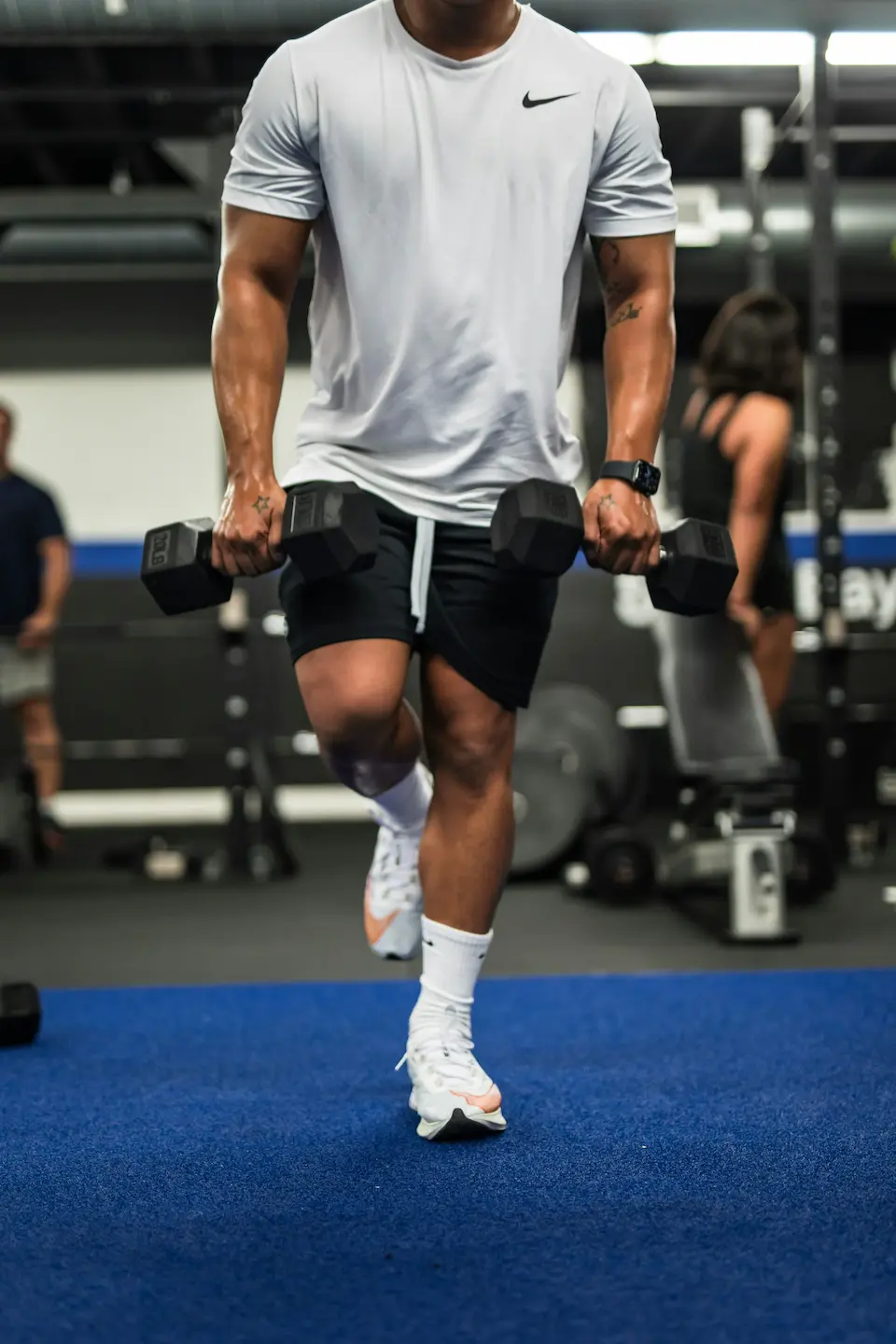
Rest-pause training is one of those gym tips that sounds too good to be true: short rest intervals (10-20 seconds) between mini-sets, maintaining intensity while saving time.
Research shows this technique produces similar hypertrophy with less training time compared to traditional sets. It’s a favorite among time-crunched lifters who want maximum stimulus without spending two hours in the gym.
How to Do It:
- Take your working set weight
- Perform as many reps as possible (stop 1-2 reps short of failure)
- Rest 15-20 seconds (breathe, shake out the muscle)
- Perform another mini-set to near failure
- Rest again
- Repeat for 3-4 total mini-sets
Best Exercises for Rest-Pause:
- Isolation movements (bicep curls, lateral raises, leg extensions)
- Machine-based compound movements (chest press, lat pulldown)
- Not recommended for heavy free-weight squats or deadlifts (safety first!)
Why It Works:
Rest-pause allows you to accumulate high-quality volume in a condensed timeframe. The short rests keep metabolic stress high while partial recovery lets you maintain intensity across all mini-sets.
Trick #6: Strategic Deloading (The “Less Is More” Hack)
Here’s a gym trick that feels wrong: intentionally lifting lighter for a week.
Periodic deloads—planned reductions in training intensity or volume—help prevent overtraining and sustain long-term progress. Beginners often neglect this essential recovery strategy, thinking every week must be harder than the last.
The Signs You Need a Deload:
- Performance plateaus or drops despite good effort
- Persistent fatigue or poor sleep
- Lack of motivation
- Aches and pains that won’t go away
Related Post
How to Deload:
- Option A: Reduce weight by 40-60%, keep same reps and sets
- Option B: Keep weight the same, cut sets and reps in half
- Option C: Take 3-4 days completely off, then return with light weights
The Schedule: Every 6-8 weeks, reduce volume by 40-50% for one week before ramping back up.
Why It Works:
Training breaks down muscle; recovery builds it. When you never deload, you accumulate fatigue that masks your true strength. A planned lighter week lets your central nervous system recharge, joints heal, and muscles supercompensate. You’ll come back stronger.
“At a minimum, you should rest and recover for one or two days a week. On those days, you can avoid exercise entirely or try an active recovery routine that isn’t centered around weights”.
Trick #7: The Mind-Muscle Connection (It’s Real)
You’ve probably rolled your eyes at someone talking about “feeling the muscle work.” But science says they’re onto something.
A study by Calatayud and colleagues found that consciously focusing on muscle contraction increased biceps activation during curls compared to lifting without focus. This neuromuscular control—the ability to contract a muscle intentionally—enhances muscle activation and growth.
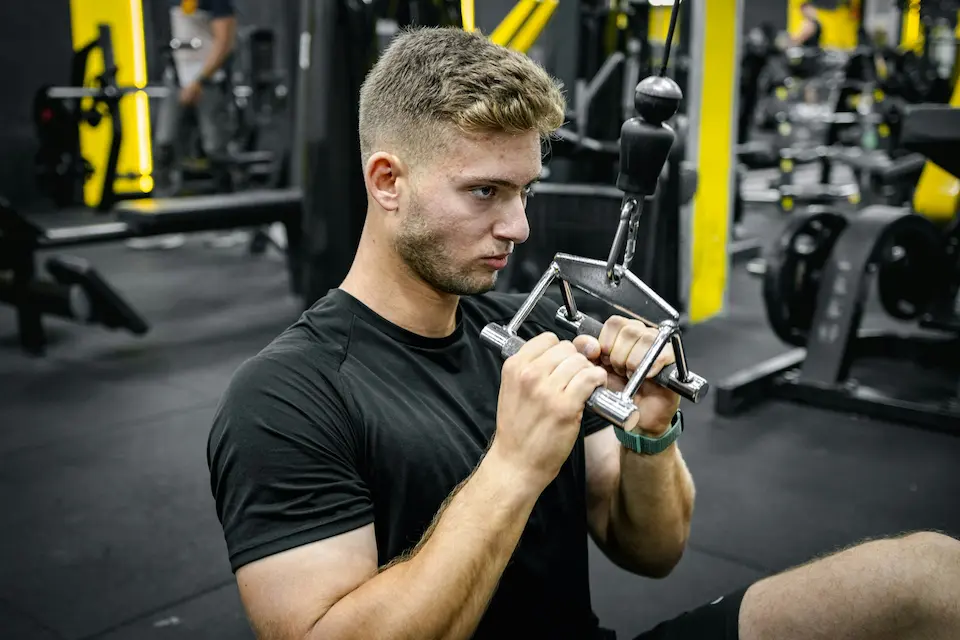
The Technique:
- Before each set, close your eyes and visualize the target muscle working
- During the rep, think about squeezing that specific muscle
- On isolation exercises, touch the working muscle with your free hand to build awareness
- Slow down enough to feel the connection
Best Exercises for Mind-Muscle Practice:
- Lateral raises (feel the side delt)
- Cable crossovers (feel the chest)
- Leg extensions (feel the quad)
- Hamstring curls (feel the hamstring)
Why It Works:
Your muscles don’t contract on their own—your nervous system controls them. By improving the neural drive to specific muscles, you recruit more motor units and create more tension. More tension equals more growth.
“Visualize and feel each target muscle working throughout every rep”. On bicep curls, imagine your bicep shortening and thickening with each rep.
Bonus: The Hydration Hack
Water makes up approximately 76% of your muscle mass. Dehydration by just 2% impairs performance, focus, and recovery.
The Hack:
Drink 35-40 mL of water per kilogram of body weight daily, increasing with sweat loss. For a 150-pound person, that’s about 2.4-2.7 liters.
Monitor urine color—pale yellow means hydrated. Dark yellow means you’re behind.
Putting It All Together: A Sample “Sneaky” Workout
Here’s how these gym tricks might look in a real session:
|
Exercise |
Main Trick |
Sets/Reps |
|---|---|---|
|
Dumbbell Bench Press |
Stretch position (deep descent, 2-sec pause at bottom) |
3 x 8-10 |
|
Lat Pulldown |
Ladder method (1,2,3,4,5 pattern) |
1 ladder |
|
Seated Cable Row |
Mind-muscle (squeeze back at peak) |
3 x 10-12 |
|
Leg Press |
Eccentric slow-down (3-sec lower) |
3 x 12 |
|
Preacher Curl |
Half-reps after failure (stretch position partials) |
2 x to failure + stretch partials |
|
Lateral Raise |
Rest-pause (last set only) |
3 x 12 + rest-pause finisher |
Frequently Asked Questions
The difference between slow gains and rapid growth isn’t always about lifting heavier or training longer. Often, it’s about these subtle gym tricks—the adjustments that most people overlook because they’re too busy grinding through the same mediocre reps.
The ladder method delivers more volume with less fatigue. Controlled eccentrics double the stimulus of every rep. Stretch-focused training might actually double your growth. Training each muscle twice weekly optimizes protein synthesis. Rest-pause squeezes extra intensity from your last set. Strategic deloading prevents burnout. Mind-muscle connection recruits more fibers.
These aren’t shortcuts. They’re smarter roads.
Pick one trick from this list. Apply it consistently for three weeks. Feel the difference. Then add another. Over time, these small adjustments compound into the kind of transformation that looks almost effortless to everyone watching—because they don’t see the sneaky work beneath the surface.
Now go get those gains. Quietly. Efficiently. Like the pros do.