The squat is more than just a leg exercise; it’s a fundamental human movement. From sitting in a chair to picking up a box, a proper squat pattern is essential for daily life and peak physical performance. Yet, it’s also one of the most misunderstood and poorly executed exercises in the gym.
Mastering this movement unlocks immense strength, builds a powerful physique, and protects your joints for the long haul. This guide will strip away the confusion. We’ll move beyond basic cues to the why behind each step, explore crucial variations, and provide a clear path from beginner to advanced.
Whether your goal is raw strength, muscle growth, or simply moving without pain, this is your definitive roadmap to mastering the squat exercise.
Part 1: The Foundation – Why Squatting Matters
Before we break down form, let’s understand the value. A squat is a compound movement, meaning it engages multiple joints and muscle groups simultaneously. It’s the ultimate efficiency tool in your training arsenal.
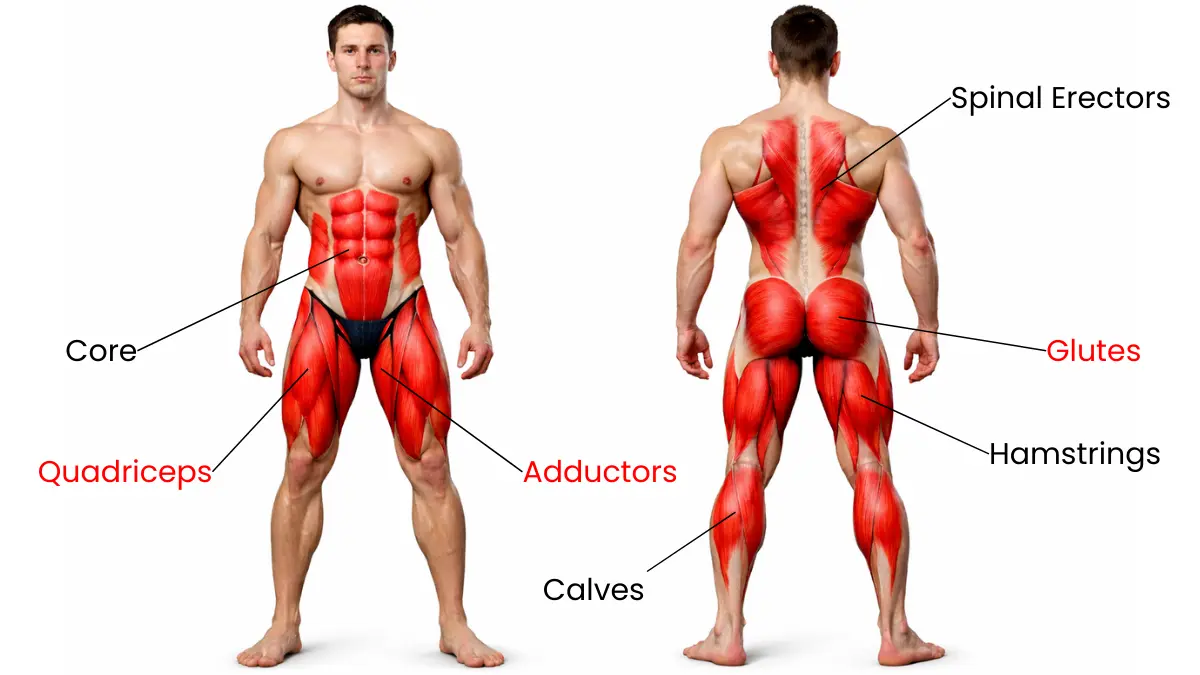
Primary Muscles Worked:
- Quadriceps: The front of your thighs (primary movers for knee extension).
- Glutes: Your powerhouse (primary movers for hip extension).
- Hamstrings: The back of your thighs (work as stabilizers and assist in hip extension).
- Adductors: Inner thighs (crucial for stability in the bottom position).
- Core & Spinal Erectors: Your entire midsection and back muscles engage isometrically to brace and keep your torso rigid.
The Benefits Go Beyond Muscle:
Part 2: The Step-by-Step Blueprint to a Perfect Bodyweight Squat
Master this pattern before adding weight. Use a mirror or record yourself.
Step 1: The Stance (Your Foundation)
- Feet: Stand with feet roughly shoulder-width apart. Your toes should be pointed slightly outward, between 5 and 30 degrees. Find what feels natural and stable for your hip structure.
- The Drill: Jump lightly in place a few times. Land softly and notice where your feet naturally fall. That’s your ideal squat stance.
Step 2: The Descent (Breaking at the Hips AND Knees)
- Initiation: Think “sit back” and “spread the floor.” Don’t just bend your knees. Imagine closing a car door with your backside.
- Spine: Maintain a proud chest. Your torso will lean forward naturally, but this should come from your hips, not from rounding your upper back. Keep your gaze fixed on a point on the floor about 6 feet (1.83 m) in front of you.
- Knees: They should track in line with your toes. Do not let them cave inward (valgus collapse). Actively push them outward throughout the movement.
Step 3: The Depth (How Low Should You Go?)
- The Gold Standard: Aim for “hips below parallel,” where the crease of your hip drops just below the top of your knee. This ensures full glute and hamstring engagement.
- Individual Limitation: Your depth will be limited by ankle mobility (dorsiflexion) and hip anatomy. If your heels lift or your lower back rounds (“butt wink”), you’ve hit your current limit. Work on mobility, but train within a safe range.
Step 4: The Ascent (Driving Up)
- The Cue: “Drive your feet through the floor.” Imagine you’re trying to push the earth away from you.
- Sequence: Lead with your chest, not your hips. Your hips and shoulders should rise together. Keep driving your knees outward.
- Finish: At the top, squeeze your glutes hard to achieve full hip extension. Don’t hyperextend your lower back.
Related Post
Part 3: Critical Form Cues & Common Mistakes to Eradicate
Part 4: The Squat Toolkit – Variations for Every Goal & Level
Not all squats are created equal. Here’s your guide to the variations.
For Beginners & Mastering Form:
- Goblet Squat: The king of beginner squats. Holding a dumbbell or kettlebell at your chest acts as a counterweight, making it easier to stay upright and hit depth. It’s the best tool to learn the pattern.
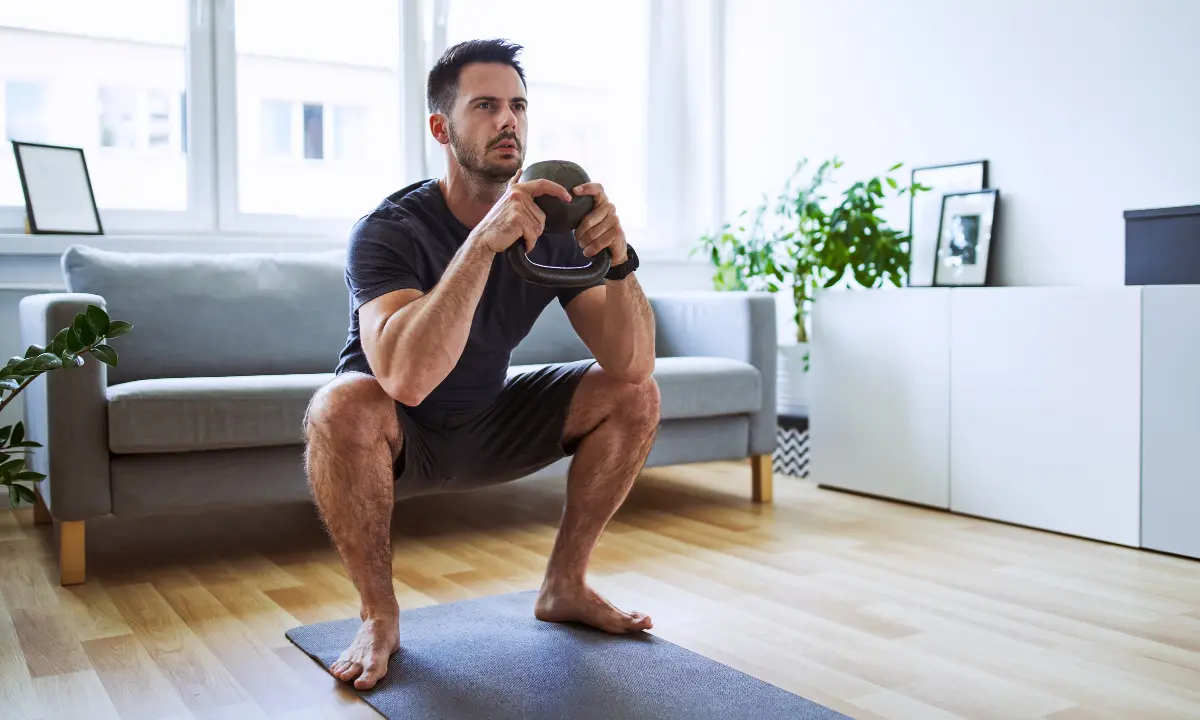
Use the goblet squat to practice your bracing—push your belly out against the weight.
- Bodyweight Box Squat: Use a box or bench to teach yourself to sit back and control depth. Tap the box lightly, don’t plop down.
For Building Muscle (Hypertrophy):
- High-Bar Back Squat: The barbell rests on your upper traps. This variation is more quad-dominant and allows for a more upright torso, making it a staple for bodybuilders.
- Hack Squat Machine: A fantastic machine for overloading the quads with minimal spinal loading. Excellent for chasing a deep burn and focusing purely on the leg muscles.
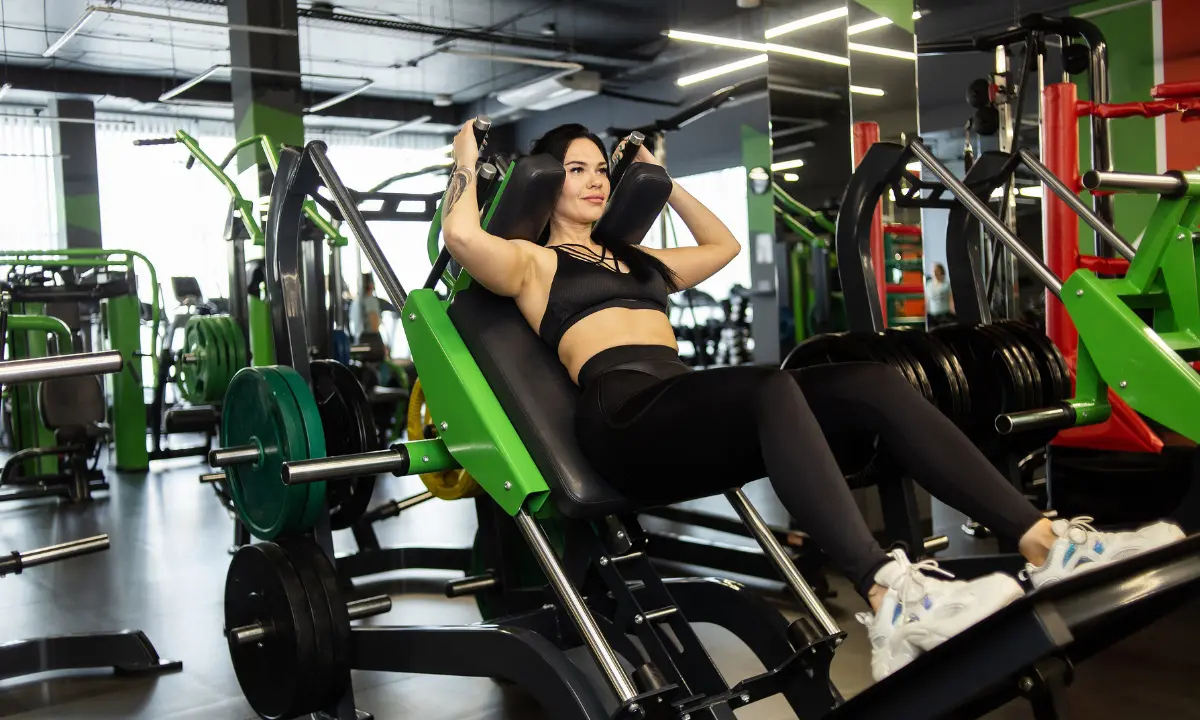
- Pendulum Squat: A modern machine masterpiece. Its unique arc follows a more natural hip path, often allowing for incredible depth and glute activation with less shear force on the knees.
For Maximal Strength & Power:
- Low-Bar Back Squat: The barbell rests lower on the rear delts. This allows you to handle more weight by involving the posterior chain (glutes, hamstrings, back) more heavily. It’s the powerlifter’s choice.
- Front Squat: The barbell rests on the front delts. This is brutally quad-dominant and demands an extremely upright torso and strong core. It’s a fantastic carryover to athletic performance and Olympic lifting.
For Specific Targeting & Mobility:
- Sumo Squat: A wide-stance variation with toes flared outward. This significantly increases emphasis on the inner thighs (adductors) and glutes while reducing the range of motion on the knees, which can be useful for those with knee sensitivities.
- Smith Machine Squat: A barbell fixed on a vertical track. Use with caution. It can be useful for beginners learning the groove or for advanced techniques like behind-the-neck presses, but it removes the need for stabilizing muscles and forces your body into a fixed, often unnatural, path. It should not replace free-weight squats.
Note: The Smith machine forces a straight line. Your body doesn’t move that way. It can put shearing force on knees and lumbar spine if the fixed path doesn’t match your anatomy.
Part 5: Programming Your Squats – How to Get Stronger
- Frequency: Squat 1-3 times per week based on your experience and recovery.
- Rep Ranges:
- Strength: 3-5 sets of 1-5 reps (heavy weight, long rest).
- Hypertrophy: 3-4 sets of 6-12 reps (moderate weight, 60-90 sec rest).
- Endurance/Technique: 2-3 sets of 12-15+ reps (light weight).
- Progressive Overload: This is the #1 rule. Each week, try to add a small amount of weight, do one more rep, or perform your sets with better control than the last.
Frequently Asked Questions
Mastering the squat is not a destination; it’s a continuous practice. It’s a conversation between your mind, your muscles, and the barbell. Start light. Be obsessively patient with form. Film yourself regularly. Address your mobility restrictions.
Whether you progress to a heavy low-bar back squat, find a new love in the pendulum squat, or use the goblet squat as your lifelong movement primer, respect the process. This foundational movement will reward your dedication with strength, resilience, and confidence that extends far beyond the gym rack. Now, get under the bar, take a big breath, and own the movement.