You’ve probably seen L‑arginine in supplements at the gym or heard it mentioned as a “nitric oxide booster.” Maybe you’ve wondered if it’s just another fitness fad or something with real science behind it.
Here’s the truth: L‑arginine is not a fad. It’s an amino acid that your body uses to produce nitric oxide—a molecule that relaxes blood vessels, improves circulation, and affects everything from heart health to exercise performance to sexual function.
But the l arginine benefits go far beyond what most people realize. From lowering blood pressure to enhancing immune function, this single amino acid plays a role in dozens of physiological processes.
This guide explores 15 science‑backed l arginine benefits, with specific sections for l arginine benefits for males and l arginine benefits for female. You’ll learn how to take it, what dosage works, potential l arginine side effects, and how to choose a quality supplement. Plus, we’ll cover arginine supplement benefits that most articles miss.
Let’s dive into the science of this remarkable amino acid.
Part 1: What Is L‑Arginine? (A Quick Primer)
L‑arginine is a conditionally essential amino acid. That means your body normally produces enough, but under stress—illness, injury, intense training—your needs may exceed production.
What It Does: L‑arginine is the only substrate for nitric oxide (NO) production. Nitric oxide relaxes the inner muscles of your blood vessels, causing them to widen (vasodilation). This increases blood flow, lowers blood pressure, and delivers oxygen and nutrients to tissues.
Natural Food Sources: Red meat, poultry, fish, dairy, eggs, nuts (walnuts), seeds (pumpkin, sesame), chickpeas, and soy.
Why Supplement? While food provides some L‑arginine, therapeutic doses (3‑6 grams daily) are difficult to achieve through diet alone. That’s where supplements come in.
Small Tip: “L‑arginine works best on an empty stomach, away from other amino acids that compete for absorption. Take it 30‑60 minutes before meals or at least 2 hours after eating.”
Part 2: The 15 Science‑Backed L Arginine Benefits
Let’s explore what L‑arginine can do for your body.
Benefit #1: Lowers Blood Pressure
High blood pressure affects over 1 billion people worldwide. L‑arginine is one of the most studied natural interventions.
The Research: A 2016 meta‑analysis of 11 randomized controlled trials found that L‑arginine supplementation significantly reduced systolic blood pressure by 5.4 mmHg and diastolic by 3.1 mmHg in people with elevated blood pressure.
How It Works: L‑arginine increases nitric oxide production, which relaxes blood vessels and reduces peripheral resistance.
Practical Upside: For people with mild to moderate hypertension, L‑arginine can be an effective adjunct to lifestyle changes—though never a replacement for prescribed medication.
Small Tip: “For blood pressure benefits, studies typically use 4‑6 grams daily. Lower doses (1‑2 grams) show minimal effect. Consistency matters—take it daily for at least 4 weeks to see results.”
Benefit #2: Improves Erectile Function (L Arginine Benefits for Males)
This is one of the most well‑known l arginine benefits for males. Erectile dysfunction (ED) affects up to 50% of men over 40.
The Research: A 2019 meta‑analysis of 10 studies found that L‑arginine supplementation significantly improved erectile function compared to placebo, particularly in men with low baseline nitric oxide levels.
How It Works: Nitric oxide relaxes the smooth muscle in penile arteries, allowing increased blood flow necessary for erection. L‑arginine provides the raw material.
Dosage: Studies showing benefit used 3‑5 grams daily. Effects are modest compared to prescription ED medications but significant for mild to moderate ED.
Small Tip: “For ED, L‑arginine works better when combined with pycnogenol (French maritime pine bark extract) or other antioxidants that prevent nitric oxide breakdown. Look for combination supplements.”
Benefit #3: Enhances Exercise Performance
Athletes and gym‑goers have used L‑arginine for decades to improve workout performance.
The Research: A 2017 review found that L‑arginine supplementation improved time to exhaustion, increased peak power output, and reduced perceived exertion during high‑intensity exercise.
How It Works: Increased blood flow delivers more oxygen and nutrients to working muscles while removing metabolic waste products like lactate.
Practical Upside: L‑arginine may help you squeeze out an extra rep or two, but the effects are more pronounced in untrained individuals than elite athletes (who already have high nitric oxide levels).
Small Tip: “Take L‑arginine 45‑60 minutes before your workout. Taking it immediately before may cause digestive discomfort. Pair with a small amount of carbohydrates to enhance absorption.”
A high‑quality L‑arginine powder mixes easily into water or pre‑workout drinks.
Benefit #4: Supports Heart Health
Beyond blood pressure, L‑arginine benefits the heart through multiple pathways.
The Research: A 2018 review concluded that L‑arginine improves endothelial function (the lining of blood vessels), reduces arterial stiffness, and lowers markers of inflammation like CRP.
How It Works: Healthy endothelial cells produce nitric oxide, which prevents platelet aggregation, reduces adhesion of white blood cells to vessel walls, and inhibits smooth muscle proliferation—all mechanisms that prevent atherosclerosis.
Practical Upside: For people with existing heart disease or multiple risk factors, L‑arginine may slow disease progression. (Always consult your cardiologist first.)
Small Tip: “If you have a history of heart attack, talk to your doctor before taking L‑arginine. Some studies suggest it’s safe, but individual cases vary.”
Benefit #5: Improves Blood Flow in Peripheral Artery Disease
Peripheral artery disease (PAD) narrows arteries in the legs, causing pain with walking.
The Research: A 2015 randomized trial found that L‑arginine (3 grams twice daily) improved walking distance and reduced leg pain in people with PAD.
How It Works: By increasing nitric oxide, L‑arginine dilates narrowed leg arteries, delivering more oxygen to muscles during exercise.
Practical Upside: For PAD patients who cannot undergo surgery or stenting, L‑arginine offers a supportive therapy.
Small Tip: “L‑arginine for PAD requires higher doses (6‑8 grams daily) and may take 4‑6 weeks to show benefit. Be patient.”
Benefit #6: Helps Manage Blood Sugar
Type 2 diabetes involves both insulin resistance and reduced nitric oxide production. L‑arginine addresses the latter.
The Research: A 2017 meta‑analysis of 11 studies found that L‑arginine supplementation significantly reduced fasting blood glucose and improved insulin sensitivity in people with or at risk for diabetes.
How It Works: Nitric oxide improves blood flow to skeletal muscle, enhancing glucose uptake. L‑arginine also stimulates insulin secretion from pancreatic beta cells.
Practical Upside: For people with prediabetes or early type 2 diabetes, L‑arginine may complement diet and exercise.
Small Tip: “If you take metformin or other diabetes medications, monitor your blood sugar closely when starting L‑arginine. It may have additive effects.”
Benefit #7: Reduces Angina Symptoms
Angina (chest pain from reduced blood flow to the heart) affects millions.
The Research: A 2000 study found that L‑arginine (3 grams three times daily) improved exercise tolerance and reduced angina episodes in patients with stable angina.
How It Works: By dilating coronary arteries, L‑arginine increases oxygen delivery to heart muscle during exertion.
Practical Upside: L‑arginine is not a replacement for nitroglycerin or other angina medications, but it may reduce their frequency.
Small Tip: “Never stop your angina medication to take L‑arginine. Use it as an add‑on only with your doctor’s approval.”
Benefit #8: Supports Immune Function
Your immune system uses L‑arginine to produce white blood cells and mount effective responses.
The Research: A 2016 review found that L‑arginine supplementation enhanced T‑cell function, improved wound healing, and reduced infection risk in surgical patients.
How It Works: L‑arginine is required for the production of nitric oxide by macrophages (immune cells that kill pathogens). It also supports the proliferation of lymphocytes.
Practical Upside: For people recovering from surgery, illness, or intense training (which temporarily suppresses immunity), L‑arginine may speed recovery.
Small Tip: “If you’re prone to colds or infections during heavy training, try 2‑3 grams of L‑arginine daily for 2‑3 weeks. It’s safe and may reduce duration of illness.”
Benefit #9: Improves Pregnancy Outcomes (L Arginine Benefits for Female)
This is a critical l arginine benefits for female that many overlook.
The Research: A 2018 meta‑analysis found that L‑arginine supplementation during pregnancy reduced the risk of preeclampsia (a dangerous blood pressure disorder) by 45% and increased birth weight in growth‑restricted fetuses.
How It Works: Improved blood flow to the placenta delivers more oxygen and nutrients to the developing fetus.
Practical Upside: For women with a history of preeclampsia or intrauterine growth restriction, L‑arginine may be prescribed by their obstetrician.
Important Note: Never supplement with L‑arginine during pregnancy without medical supervision. Doses and timing must be carefully managed.
Small Tip: “L‑arginine is sometimes given intravenously in hospital settings for severe preeclampsia. Oral supplements are less studied but promising. Always consult your OB‑GYN first.”
Benefit #10: Relieves Symptoms of Intermittent Claudication
Intermittent claudication is leg pain during walking caused by narrowed arteries (similar to PAD but more specific).
The Research: A 2011 study found that L‑arginine (6 grams daily for 6 months) significantly increased pain‑free walking distance in patients with intermittent claudication.
How It Works: Same mechanism as PAD—improved blood flow to leg muscles.
Practical Upside: For patients who cannot take blood thinners or undergo surgery, L‑arginine offers a well‑tolerated option.
Small Tip: “Combine L‑arginine with a walking program. The increased blood flow makes exercise feel easier, which further improves vascular health. Positive feedback loop.”
Benefit #11: May Help with Migraine Prevention
Migraines involve abnormal blood vessel dilation and constriction. L‑arginine’s effect on nitric oxide is complex.
The Research: A 2016 study found that L‑arginine supplementation reduced migraine frequency and severity in some patients, particularly those with low baseline nitric oxide.
How It Works: By normalizing vascular tone, L‑arginine may prevent the extreme dilation that triggers migraine pain. However, for some individuals, nitric oxide can trigger migraines. Individual response varies.
Practical Upside: If you have migraines with known vascular components, a trial of L‑arginine (under medical supervision) may help.
Small Tip: “Start with a low dose (1 gram) and monitor your headache pattern for 2 weeks. If migraines worsen, discontinue. If they improve, gradually increase to 2‑3 grams.”
Benefit #12: Supports Wound Healing
L‑arginine is critical for tissue repair.
The Research: A 2018 review found that L‑arginine supplementation accelerated wound healing, increased collagen deposition, and reduced hospital stay in surgical and burn patients.
How It Works: Nitric oxide promotes angiogenesis (new blood vessel formation) and fibroblast activity—both essential for healing.
Practical Upside: For people recovering from surgery, pressure ulcers, or diabetic foot ulcers, L‑arginine is often included in specialized nutritional formulas.
Small Tip: “If you have a slow‑healing wound, ask your doctor about L‑arginine. It’s often combined with glutamine and HMB for enhanced effects.”
Benefit #13: Improves Kidney Function in Some Conditions
Kidney disease is complex, but L‑arginine shows promise in certain contexts.
The Research: A 2015 study found that L‑arginine supplementation improved glomerular filtration rate (a measure of kidney function) in patients with early‑stage diabetic kidney disease.
The Nuance: L‑arginine is not recommended for advanced kidney disease (stage 4‑5) because impaired kidneys may not process amino acids properly, potentially worsening outcomes.
Practical Upside: For early kidney disease with normal blood pressure, L‑arginine may slow progression.
Small Tip: “If you have kidney disease, never take L‑arginine without your nephrologist’s approval. Blood levels must be monitored.”
Benefit #14: May Reduce Symptoms of Raynaud’s Phenomenon
Raynaud’s causes fingers and toes to turn white and blue in response to cold or stress—due to excessive blood vessel constriction.
The Research: A 2004 study found that L‑arginine (3 grams twice daily for 4 weeks) reduced the frequency and severity of Raynaud’s attacks.
How It Works: L‑arginine counteracts the vasoconstriction by boosting nitric oxide, keeping vessels more open.
Practical Upside: For people with primary Raynaud’s (not caused by another condition), L‑arginine can be a helpful natural therapy.
Small Tip: “Combine L‑arginine with niacin (vitamin B3) for additive vasodilation. But start low—niacin causes flushing that some find uncomfortable.”
Benefit #15: Enhances Nitric Oxide Production for Overall Health
This final benefit ties all the others together: L‑arginine is the rate‑limiting substrate for nitric oxide.
Why It Matters: Nitric oxide declines with age. By age 40, your body produces about half the nitric oxide it did at 20. This decline contributes to:
- Higher blood pressure
- Reduced exercise capacity
- Slower wound healing
- Cognitive decline
- Sexual dysfunction
Supplementing with L‑arginine provides the raw material to restore nitric oxide levels.
The Research: A 2021 study found that L‑arginine supplementation (3 grams daily for 8 weeks) significantly increased plasma arginine levels and improved endothelial function in healthy older adults.
Practical Upside: Even if you don’t have a specific condition, L‑arginine supports the fundamental biology of healthy aging.
Small Tip: “For healthy adults without specific deficiencies, 2‑3 grams of L‑arginine daily is a reasonable maintenance dose. Higher doses don’t provide additional benefits.”
Part 3: How to Take L‑Arginine (Dosage, Timing, Forms)
Getting the most from l arginine supplement benefits requires proper administration.
Recommended Dosage by Goal:
|
Goal |
Daily Dose |
Timing |
|---|---|---|
|
General health |
2‑3 grams |
Once daily, morning |
|
Exercise performance |
3‑6 grams |
45‑60 min pre‑workout |
|
Blood pressure |
4‑6 grams |
Split into 2 doses (morning/evening) |
|
Erectile function |
3‑5 grams |
Daily, may split |
|
Wound healing |
6‑8 grams |
Split into 2‑3 doses |
Forms of L‑Arginine:
|
Form |
Absorption |
Best For |
|---|---|---|
|
L‑Arginine (standard) |
Good |
General use, lower cost |
|
L‑Arginine HCl |
Good |
Similar to standard |
|
L‑Arginine AKG (Alpha‑Ketoglutarate) |
Slightly better? |
Exercise performance (marketing driven) |
|
L‑Citrulline (converts to arginine) |
Superior |
Higher bioavailability, fewer GI issues |
Important Note: L‑citrulline is often preferred over L‑arginine because it bypasses first‑pass metabolism in the liver, leading to higher and longer‑lasting arginine levels. Many studies showing “arginine” benefits actually used L‑citrulline. For serious nitric oxide support, consider L‑citrulline instead.
Small Tip: “If L‑arginine causes digestive upset (common at doses above 3 grams), switch to L‑citrulline. You’ll need about 2‑3 grams of L‑citrulline to equal 6 grams of L‑arginine. It’s gentler on the stomach.”
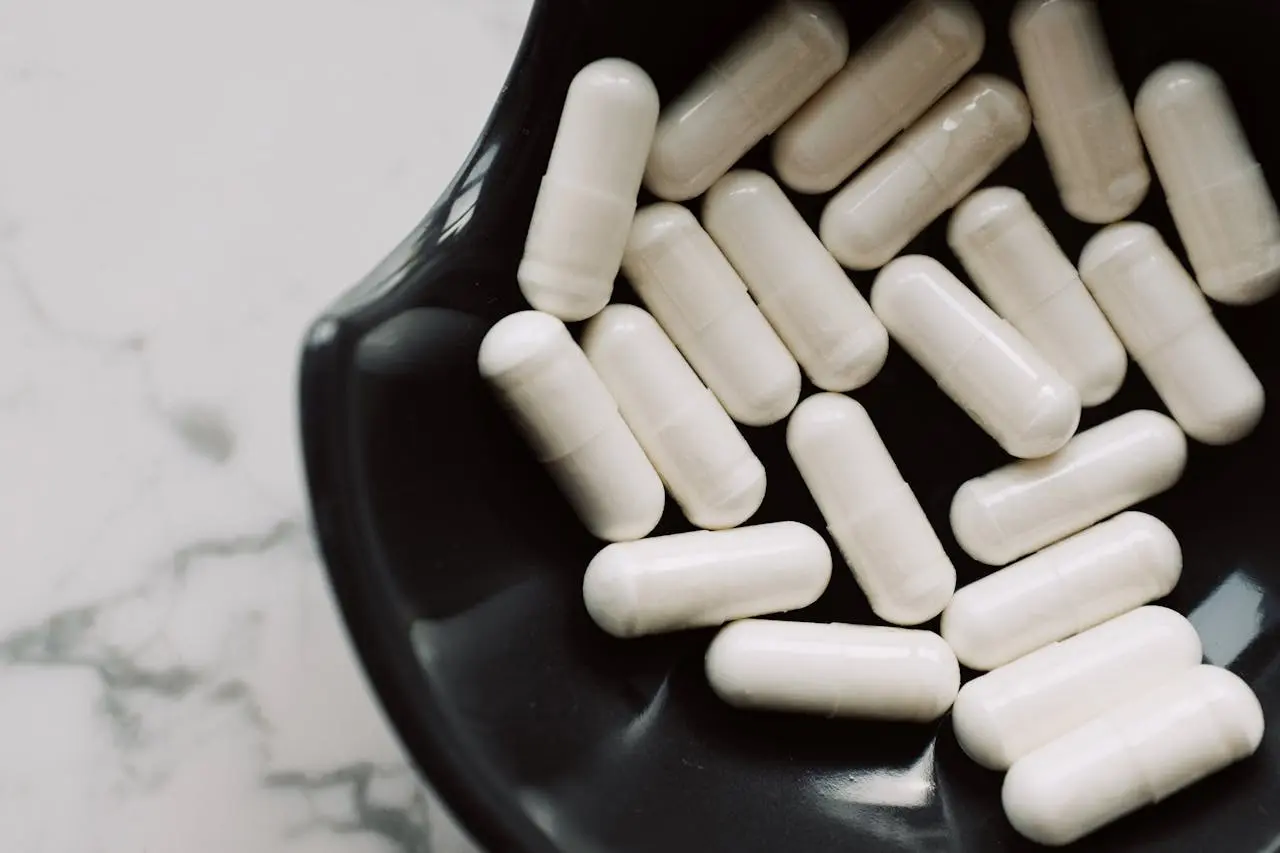
For those who prefer capsules over powder, a L‑arginine capsule supplement offers convenience and precise dosing.
Part 4: L Arginine Side Effects (What to Watch For)
L‑arginine is generally safe, but side effects can occur, especially at higher doses.
Common Side Effects (1‑10% of users):
|
Side Effect |
Why It Happens |
Management |
|---|---|---|
|
Digestive discomfort |
High doses (>5g) |
Reduce dose, take with food, switch to L‑citrulline |
|
Bloating, diarrhea |
Osmotic effect in gut |
Split doses, increase gradually |
|
Nausea |
Gastric irritation |
Take with small snack |
|
Headache |
Nitric oxide‑induced vasodilation |
Lower dose; usually resolves in 1‑2 weeks |
Serious but Rare Side Effects (Consult Doctor Immediately):
- Low blood pressure (hypotension): Dizziness, fainting—more likely if you already take blood pressure medication.
- Allergic reaction: Rash, itching, swelling, difficulty breathing (rare).
- Worsening of herpes outbreaks: L‑arginine may trigger cold sores or genital herpes in susceptible individuals because the herpes virus uses arginine to replicate. (L‑lysine counteracts this.)
Who Should NOT Take L‑Arginine:
- People with a history of heart attack (controversial; some studies suggest caution)
- Those with active herpes simplex (cold sores, genital herpes)
- People with low blood pressure (hypotension)
- Those with kidney or liver disease (without medical supervision)
- Pregnant or breastfeeding women (without doctor’s approval)
- Anyone scheduled for surgery (stop 2 weeks prior due to blood pressure effects)
Small Tip: “If you get frequent cold sores, take L‑lysine (1‑2 grams daily) along with L‑arginine. Lysine competes with arginine and can prevent outbreaks. Or skip arginine entirely.”
Part 5: Drug Interactions
L‑arginine can interact with several medications.
|
Medication |
Interaction |
Action |
|---|---|---|
|
Blood pressure drugs (ACE inhibitors, ARBs, calcium channel blockers) |
Additive blood pressure lowering |
Monitor BP closely; may need dose adjustment |
|
Nitrates (nitroglycerin, isosorbide) |
Severe hypotension possible |
Do not combine without doctor’s supervision |
|
Viagra, Cialis, Levitra (PDE5 inhibitors) |
Potentially dangerous drop in BP |
Avoid combining |
|
Diabetes medications |
Increased insulin sensitivity |
Monitor blood sugar |
|
Blood thinners (warfarin, aspirin) |
Theoretical increased bleeding risk (weak evidence) |
Monitor INR if on warfarin |
Small Tip: “Always tell your doctor and pharmacist that you take L‑arginine. It’s a supplement, but it’s also a physiological agent with real effects.”
Part 6: L Arginine vs L Citrulline (Which Is Better?)
This is a common debate.
|
Feature |
L‑Arginine |
L‑Citrulline |
|---|---|---|
|
Mechanism |
Direct precursor to NO |
Converts to arginine in kidneys |
|
Bioavailability |
Low (30‑40% absorbed) |
High (90%+ absorbed) |
|
GI tolerance |
Poor at high doses |
Excellent even at high doses |
|
Peak blood levels |
Short (1‑2 hours) |
Longer (3‑5 hours) |
|
Effective dose |
3‑6 grams |
2‑3 grams (as L‑citrulline) |
|
Cost |
Lower |
Slightly higher |
Verdict: For most purposes, L‑citrulline is superior. It raises arginine levels more effectively, causes fewer side effects, and lasts longer. However, L‑arginine is still effective and more widely available.
Small Tip: “If you’re buying a pre‑workout supplement, look for L‑citrulline (or citrulline malate) instead of L‑arginine. You’ll get better pumps and less digestive distress.”
Frequently Asked Questions
Q: How long does it take for L‑arginine to work?
A: For acute effects (exercise, blood flow), you may notice differences within 45‑60 minutes. For chronic benefits (blood pressure, erectile function), allow 4‑8 weeks of daily use.
Q: Can I take L‑arginine every day?
A: Yes. Long‑term studies (up to 2 years) show safety at doses up to 6 grams daily. Some people take it indefinitely.
**Q: What are *l arginine benefits for males* beyond erectile function?**
A: Improved exercise performance, heart health, blood pressure control, and possibly fertility (sperm quality). Some studies show increased sperm count and motility.
**Q: What are *l arginine benefits for female* besides pregnancy?**
A: Improved blood flow to reproductive organs (possibly enhancing sexual response), exercise performance, blood pressure control, and wound healing. Some women report reduced PMS symptoms, though evidence is limited.
Q: Can I take L‑arginine with other amino acids?
A: Yes, but take it on an empty stomach, away from other amino acids (including protein shakes). Competition for absorption reduces effectiveness.
Q: Is L‑arginine safe for teenagers?
A: Generally yes for healthy teens using standard doses (2‑3 grams). However, always consult a pediatrician before giving supplements to adolescents.
**Q: What are the *l arginine side effects* I should worry about?**
A: Most common are digestive (bloating, diarrhea) at doses above 5 grams. The most serious (rare) is severe hypotension in people on blood pressure medications. Herpes outbreaks are a concern for susceptible individuals.
Q: Can I get enough L‑arginine from food?
A: For general health, yes (about 4‑5 grams daily from a high‑protein diet). For therapeutic doses (3‑6 grams additional), supplementation is necessary.
Small Tip: “Keep your L‑arginine in a cool, dark place. Heat and light degrade amino acids over time. A dark glass bottle is ideal.”
A dark glass supplement bottle with airtight lid preserves potency for long‑term storage.
A Versatile Amino Acid for Whole‑Body Health
L‑arginine is not a miracle cure. It won’t reverse advanced disease or replace prescription medications. But as a supportive supplement, the l arginine benefits are broad, well‑documented, and accessible.
From lowering blood pressure and improving erectile function to enhancing exercise performance and speeding wound healing, this single amino acid supports fundamental processes throughout your body.
The key is using it correctly: appropriate dosage, proper timing, awareness of side effects, and medical supervision if you have underlying conditions.
Start with 2‑3 grams daily on an empty stomach. Give it 4 weeks. Notice how you feel—more energy, better workouts, improved circulation. Adjust as needed.
Your blood vessels will thank you.