I used to believe that croissants were strictly bakery territory. Something you admire through a glass display case, pay $5 for, and never attempt at home.
Then I found a croissant recipe easy enough to change my mind. No, seriously. This isn’t one of those “easy recipes” that still requires three days and a culinary degree. This is the real deal – buttery, flaky, impossibly layered croissants that puff up golden and shatter into a million crisp crumbs with every bite.
The secret? A clever lamination technique using special butter that doesn’t melt easily, plus a freezer trick that keeps everything manageable.
I learned this method from Vinastar Channel on YouTube, and after testing it in my own kitchen (multiple times, with plenty of delicious failures along the way), I’ve refined it into a croissant recipe easy enough for any home baker.
Why This Croissant Recipe Actually Works
Traditional croissants intimidate even experienced bakers. The butter leaks. The dough tears. The layers never quite form. But this recipe solves the biggest problems:
- Cold water and freezer time keep the butter solid during lamination
- Special lamination butter (available at baking supply stores) doesn’t melt at room temperature
- Simple double-fold technique creates 16 perfect layers without complex folding patterns
- No stand mixer required – kneading by hand works beautifully

If you’ve ever wanted to conquer the fear of laminated dough, this croissant recipe easy is your golden ticket.
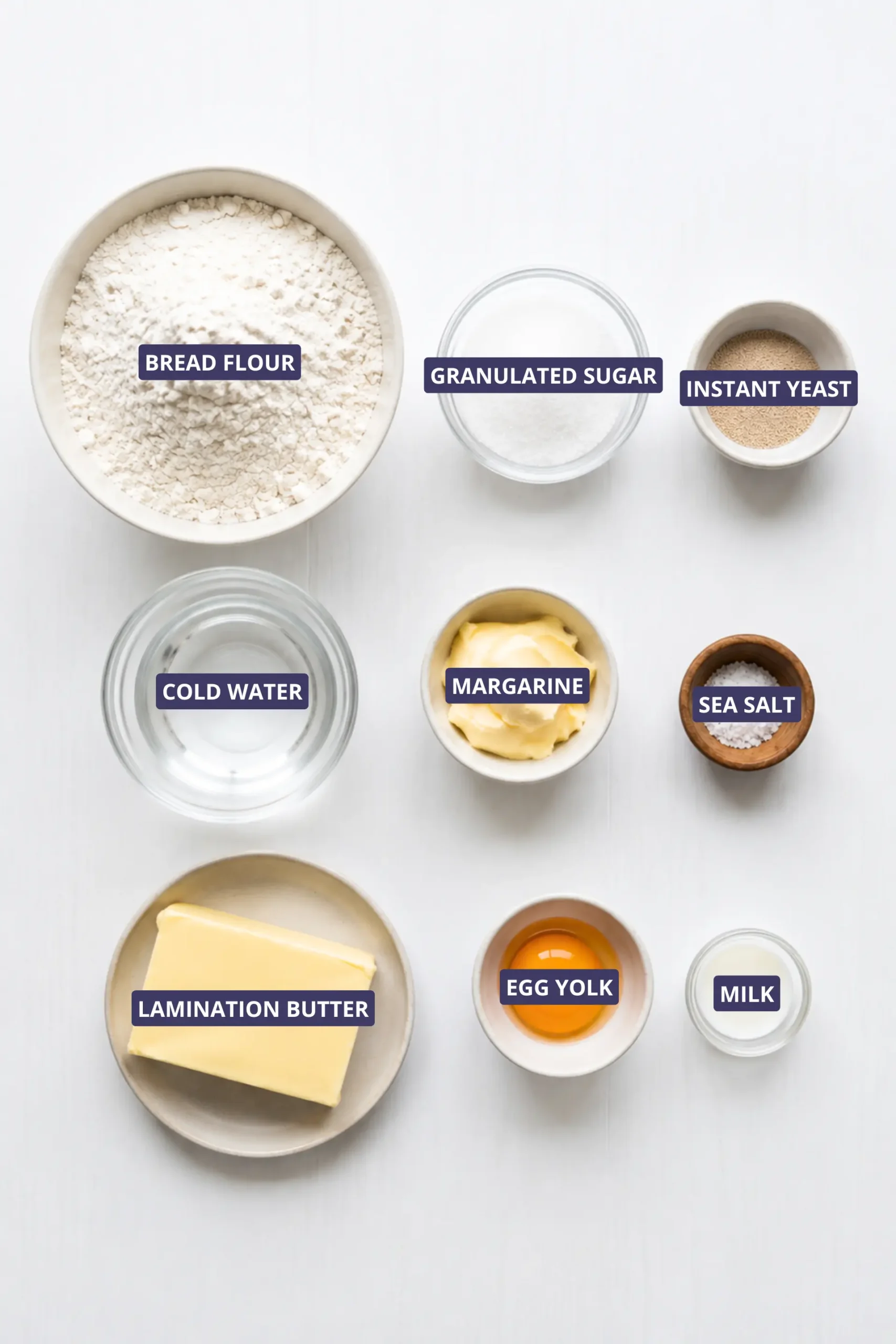
Ingredients for This Croissant Recipe
Makes approximately 8-10 medium croissants
Dough Ingredients
Lamination Butter
Look for “baking butter” or “dry butter” – it often comes in pre-measured sheets.
Egg Wash
Essential Tools for This Croissant Recipe Easy
Having the right tools makes lamination infinitely easier. These are the ones I use:
- Large Silicone Pastry Mat – Protects your counter, shows measurements, and makes cleanup a breeze.
- French Rolling Pin (tapered) – The tapered ends give you better control when rolling laminated dough.
- Sharp Bench Scraper – Essential for cutting clean dough edges and scraping up sticky bits.
- Pastry Brush – For applying egg wash evenly without tearing delicate dough.
Step-by-Step Instructions
Step 1: Make the Dough
In a large mixing bowl, combine:
Add the cold water and 30g of butter (softened). Mix with a wooden spoon or your hands until a shaggy dough forms.
Step 2: Knead by Hand (10 Minutes)
Turn the dough out onto a clean, unfloured surface (a light dusting of flour is fine if it’s sticking). Knead for at least 10 minutes.
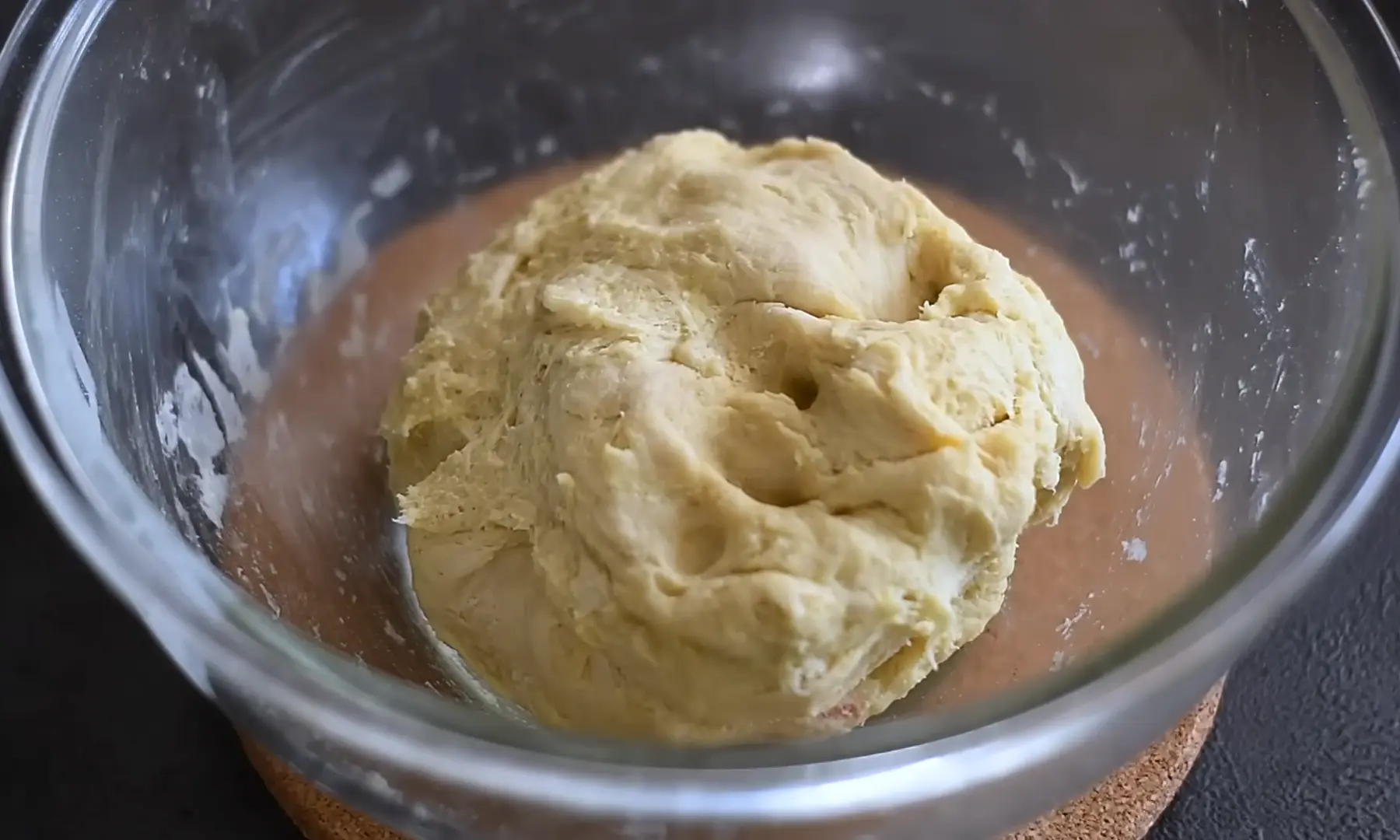
How to knead: Push the dough away with the heel of your hand, fold it back, turn it slightly, and repeat. You’re looking for a smooth and elastic dough that springs back when poked.
The dough should feel soft but not sticky. If it’s sticking to your hands like glue, add 1 teaspoon of flour at a time. If it’s stiff and cracking, add 1 teaspoon of water.
Step 3: Chill the Dough
Shape the dough into a rectangle about 1 cm thick. Wrap it in plastic wrap or place it in a covered container.
Freeze for 30 minutes to 1 hour. Not the refrigerator – the freezer. You want the dough to be very cold but not frozen solid. This step is crucial for a croissant recipe easy because cold dough is much easier to laminate.
Step 4: Prepare the Lamination Butter
While the dough chills, prepare your 150g of lamination butter.
If you have a butter sheet (pre-rolled), keep it cold. If you have a block, place it between two sheets of parchment paper and roll it into a rough square about 15×15 cm (6×6 inches) and 1 cm thick. Return it to the refrigerator.
The butter and dough should be at similar temperatures when you start laminating. If the butter is too hard, it will crack. If too soft, it will ooze out. Aim for “cold but pliable” – it should bend slightly without breaking.
Step 5: First Lamination – Enclose the Butter
Remove the chilled dough from the freezer. On a lightly floured surface, roll the dough into a rectangle approximately 30×20 cm (12×8 inches).
Place the butter sheet in the center of the dough. Fold the dough over the butter like a letter – one side over the butter, then the other side on top. Pinch the edges to seal the butter completely inside. No butter should be visible, or it will leak during rolling.
Related Post

Step 6: Roll and Double Fold
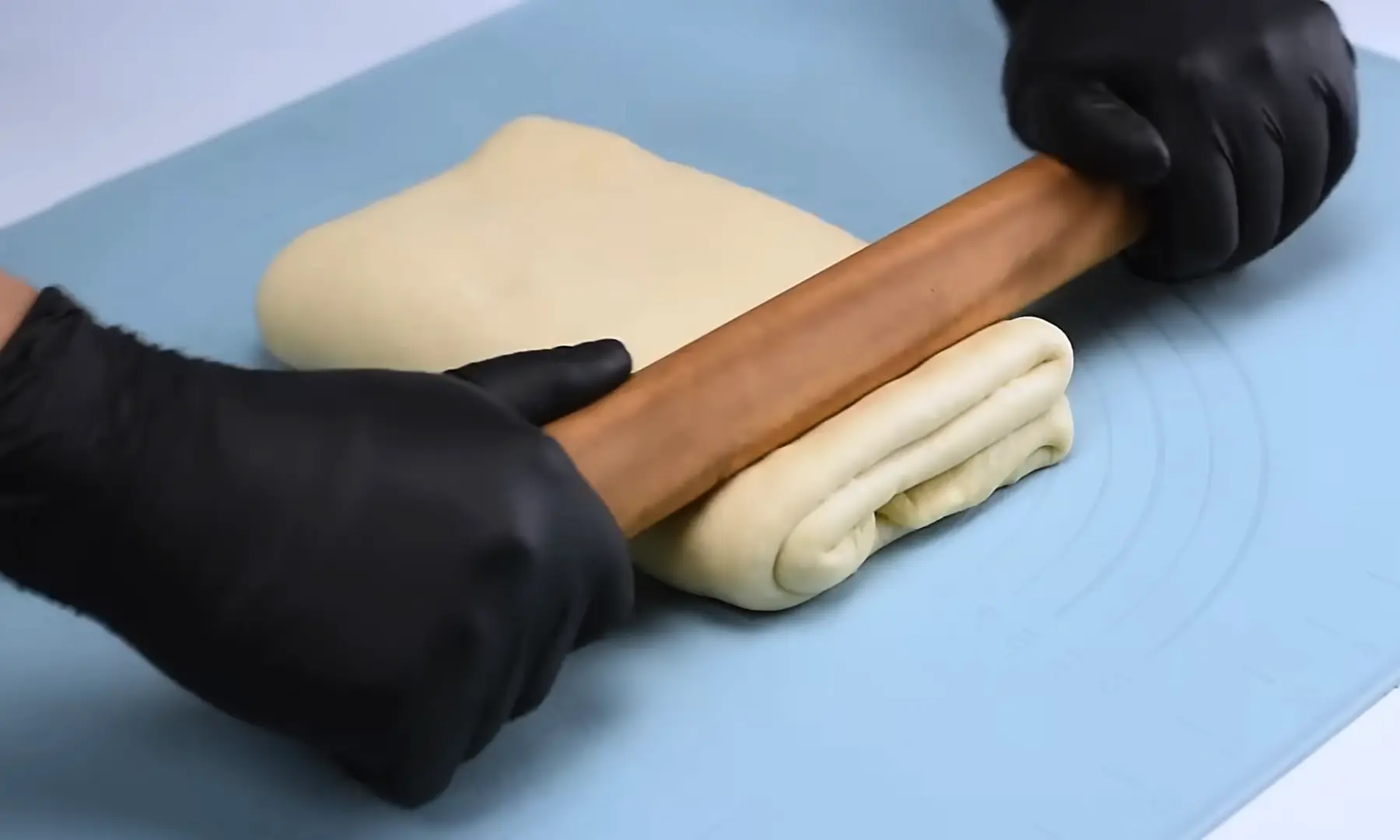
Gently roll the dough into a long rectangle about 45 cm (18 inches) long and 15 cm (6 inches) wide. Keep the thickness even – aim for 5-7 mm.
Now perform a double fold (also called a book fold):
- Fold the top third of the dough down to the center.
- Fold the bottom third up to meet it (like folding a business letter).
- Then fold the entire thing in half.
You’ve just created 8 layers of butter and dough. Wrap the dough and freeze for 15 minutes to rest and chill.
If at any point the butter feels soft or starts to ooze, stop and freeze the dough for 10-15 minutes. Patience is the secret to a successful croissant recipe easy.
Step 7: Second Lamination – Another Double Fold
Remove the dough from the freezer. Roll it out again to 45-50 cm long. Trim both ends with a sharp bench scraper to create clean, straight edges (this ensures even layers).
Perform another double fold exactly as before. You now have 16 layers – perfect for flaky, honeycomb-structured croissants.
Wrap and freeze for 30 minutes. This final rest is essential before shaping.
Step 8: Roll Out the Final Dough
On a lightly floured surface, roll the dough into a large rectangle measuring 28×30 cm (11×12 inches) with a thickness of 4-5 mm (about ⅙ inch). Go slowly and carefully – don’t tear the dough.
If the dough resists, let it rest for 5 minutes. Never force it.
Step 9: Cut the Triangles
Using a sharp cutter or pizza wheel, trim the edges to create a clean rectangle. Then cut triangles:
- Cut the rectangle lengthwise into strips about 10 cm (4 inches) wide
- Then cut each strip diagonally into triangles about 12-15 cm (5-6 inches) tall
Each triangle will become a croissant. You should get 8-10 triangles.
Don’t throw away the leftover dough scraps! Layer them together, gently reroll once, and make a few “scrap croissants” – they won’t be as perfect, but they’ll still be delicious.
Step 10: Shape the Croissants
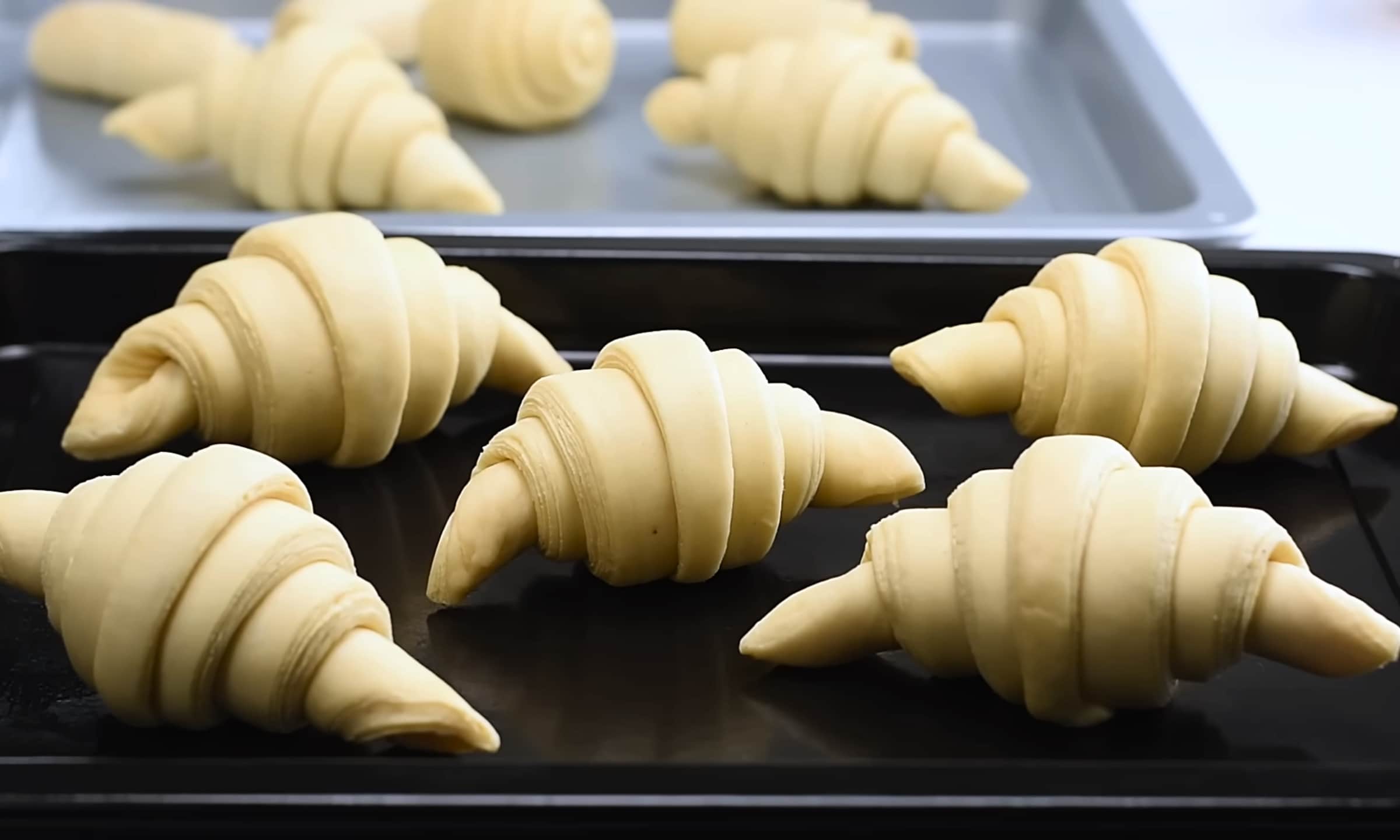
Take each triangle and gently stretch it to a length of 36-38 cm (14-15 inches). This stretching elongates the layers and creates more surface area for rolling.
At the wide base of the triangle, cut a small 1 cm slit in the center. This helps the croissant curl properly during baking.
Roll from the wide end toward the point, tucking the tip underneath. Don’t roll too tight – leave room for the dough to expand.
Step 11: Proof (Let Them Rise)
Place the shaped croissants on a baking sheet lined with parchment paper, leaving plenty of space between them (they will double in size).
Spray lightly with water to maintain humidity. Cover loosely with plastic wrap or a clean kitchen towel.
Let them proof at room temperature (22-24°C / 72-75°F) until doubled in size. This can take 1-2 hours, depending on your kitchen temperature. The croissants should feel puffy and jiggle slightly when you shake the pan.
If your kitchen is cold, turn your oven on to the lowest setting for 1 minute, then turn it off. Place the croissants inside with the door slightly ajar. The residual warmth speeds up proofing without melting the butter.
Step 12: Egg Wash
Preheat your oven to 190°C (375°F) for at least 10 minutes.
Mix 1 egg yolk + ½ tablespoon milk. Gently brush this mixture over the proofed croissants. Be careful not to deflate them – use a light touch. Avoid letting egg wash drip onto the baking sheet (it burns and smokes).
Step 13: Bake
Bake at 190°C (375°F) for 20 minutes, rotating the baking sheet halfway through (at 10 minutes) for even browning.
Ovens vary. Start checking at 18 minutes. You’re looking for a deep golden brown color – not pale, not burnt. The croissants should feel light and sound hollow when tapped on the bottom.
If they’re browning too quickly, reduce the temperature to 175°C (350°F) for the last 5 minutes.
Step 14: Cool
Transfer the baked croissants to a wire rack. Let them cool for at least 10 minutes before eating – the interior needs time to set, or the layers will feel doughy.
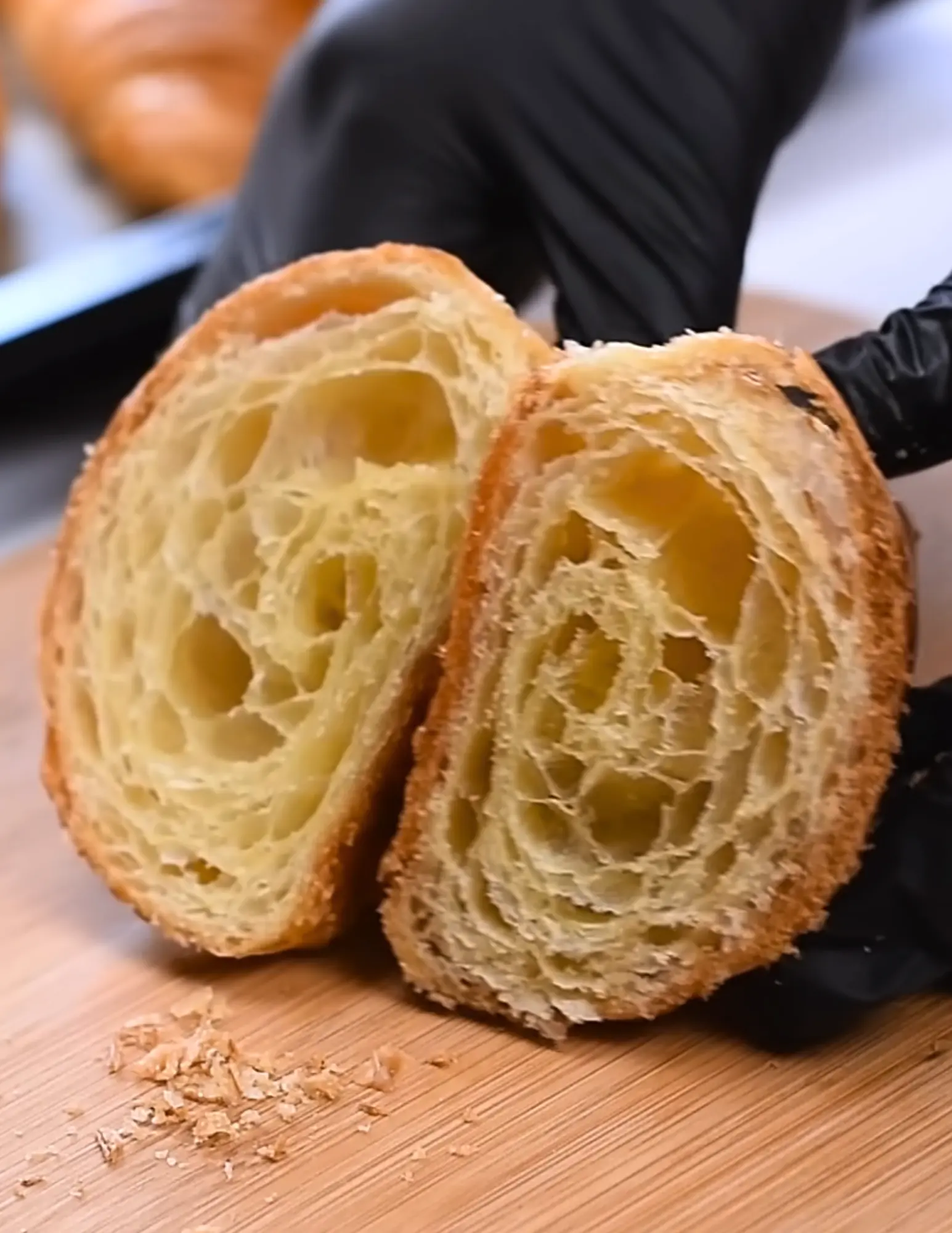
Then? Tear one open. Listen to the crackle. Watch the steam escape from a hundred flaky layers. That’s the sound of success.

My Honest Review After Making This Recipe
Texture: When done right, these croissants have a paper-thin, shattering crust and a honeycomb interior with soft, slightly chewy layers. The edges are darker and caramelized from the egg wash.
Flavor: Deeply buttery with a hint of sweetness and salt. Nothing compares to a croissant still warm from your own oven.
Difficulty: This is not a beginner recipe, but it’s the easiest croissant recipe easy that actually produces real laminated croissants. The freezer rest periods and special butter make it far more forgiving than traditional methods.
Would I make them again? Absolutely. I’ve made this recipe a dozen times now. My first batch was ugly – uneven, a little lopsided, but still delicious. By the third batch, I was producing bakery-worthy croissants. You will too.
One thing I changed from the original: Vinastar’s recipe uses 150g of lamination butter, which I found perfect. However, I added the double-fold method (the original had a single fold?) – actually, the original notes say “double fold” as well. I kept that, but emphasized the freezer rests more.
Evaluation
Tips for Success with This Croissant Recipe Easy
Tip #1: Temperature Is Everything
The difference between glorious croissants and a buttery mess is temperature. Your dough and butter should be cold but not frozen. If your kitchen is warmer than 24°C (75°F), work quickly and return the dough to the freezer between folds.
Tip #2: Use the Right Butter
Regular supermarket butter contains 16-18% water. When you roll it, that water can leak into the dough, creating steam that separates layers prematurely. Lamination butter has 84%+ fat content and is much more stable. It’s worth the trip to a baking supply store (or ordering online).
Tip #3: Don’t Skip the Freezer Rests
Every time the instructions say “freeze for 15 minutes,” do it. These rests allow the gluten to relax (so the dough doesn’t spring back when rolling) and keep the butter solid. Skipping a rest is the #1 reason for butter leakage.
Tip #4: Proof Properly
Under-proofed croissants will be dense and doughy. Over-proofed croissants will collapse in the oven and taste sour. The sweet spot is when they’ve doubled in size and feel like a marshmallow when gently pressed. In a cool kitchen, this can take 2-3 hours. Don’t rush it.

Easy Croissant
INGREDIENTS
Dough ingredients
- 300 g bread flour (11-13% protein)
- 40 g granulated sugar
- 5-6 g instant yeast (5g for warm kitchen, 6g for cool)
- 145-150 g cold water
- 30 g unsalted butter or margarine (softened)
- 5 g fine sea salt
Lamination butter
- 150 g lamination butter (84%+ fat or European-style butter (Plugrà, Kerrygold))
Egg wash
- 1 egg yolk + ½ tablespoon milk
INSTRUCTIONS
- In a large bowl, combine bread flour, sugar, instant yeast, and salt (keep salt away from yeast initially). Add cold water and 30g softened butter. Mix until a shaggy dough forms.
- Turn dough onto a clean surface. Knead by hand for 10 minutes until smooth and elastic. Add small amounts of flour or water if needed.
- Shape dough into a 1 cm thick rectangle. Wrap in plastic and freeze for 30–60 minutes until very cold but not frozen solid.
- While dough chills, roll lamination butter into a 15×15 cm square, 1 cm thick. Keep refrigerated.
- On a floured surface, roll chilled dough into a 30×20 cm rectangle. Place butter sheet in the center. Fold dough over butter like a letter, sealing edges completely.
- Roll dough into a 45×15 cm rectangle (5–7 mm thick). Perform a double fold: fold top third to center, bottom third to meet it, then fold in half. Wrap and freeze for 15 minutes.
- Roll dough again to 45–50 cm long. Trim edges. Perform another double fold. Wrap and freeze for 30 minutes.
- Roll dough into a 28×30 cm rectangle, 4–5 mm thick. Let rest if dough resists.
- Trim edges. Cut lengthwise into 10 cm strips, then cut each strip diagonally into 12–15 cm triangles. Reserve scraps.
- Gently stretch each triangle to 36–38 cm long. Cut a 1 cm slit at the wide base. Roll from wide end toward point, tucking tip underneath.
- Place shaped croissants on parchment-lined baking sheet, spaced apart. Spray lightly with water. Cover and proof at room temperature until doubled in size (1–2 hours).
- Preheat oven to 190°C (375°F). Mix 1 egg yolk with ½ tablespoon milk. Brush gently over proofed croissants.
- Bake at 190°C for 20 minutes, rotating halfway. Reduce temperature if browning too fast. Bake until deep golden brown.
- Transfer to wire rack. Cool for at least 10 minutes before serving.
NOTES
If you’ve made it this far, you’re ready. Yes, this croissant recipe is easy and asks more of you than dropping cookie dough on a sheet pan. But what it gives back is extraordinary.
The first time you pull a tray of golden, puffy, shattering croissants from your oven – and you realize you made those – is a moment you’ll remember. The smell alone is worth it. That intoxicating mix of butter, toasted flour, and caramelized sugar fills your entire kitchen.
Related Post

I’ve made this recipe on sleepy Sunday mornings, for holiday brunches, and once just because I needed to feel accomplished. Every single time, the results have brought smiles.
Now it’s your turn. Are you going to try this croissant recipe easily? Do you have a favorite filling idea (chocolate batons, almond cream, or ham and cheese)? Drop a comment below – I’d love to hear about your croissant journey.
Recipe credit:
This croissant recipe easy is adapted from Vinastar Channel on YouTube. Watch their original video for a visual guide to the folding and shaping process.