I assumed German chocolate cake came from Germany. It doesn’t. Not even close.
The name actually comes from Sam German, an American baker who created a dark baking chocolate bar for Baker’s Chocolate Company back in 1852. The cake we now call “German chocolate cake” is a purely American invention – and one of the most decadent, satisfying layer cakes you’ll ever make.
After testing this German chocolate cake recipe from Whisk Takers, I’m convinced this is the version every home baker needs. It has fudgy, almost brownie-like chocolate layers, a ridiculously creamy coconut-pecan filling that cooks right on the stove, and an optional chocolate ganache that takes it over the top.
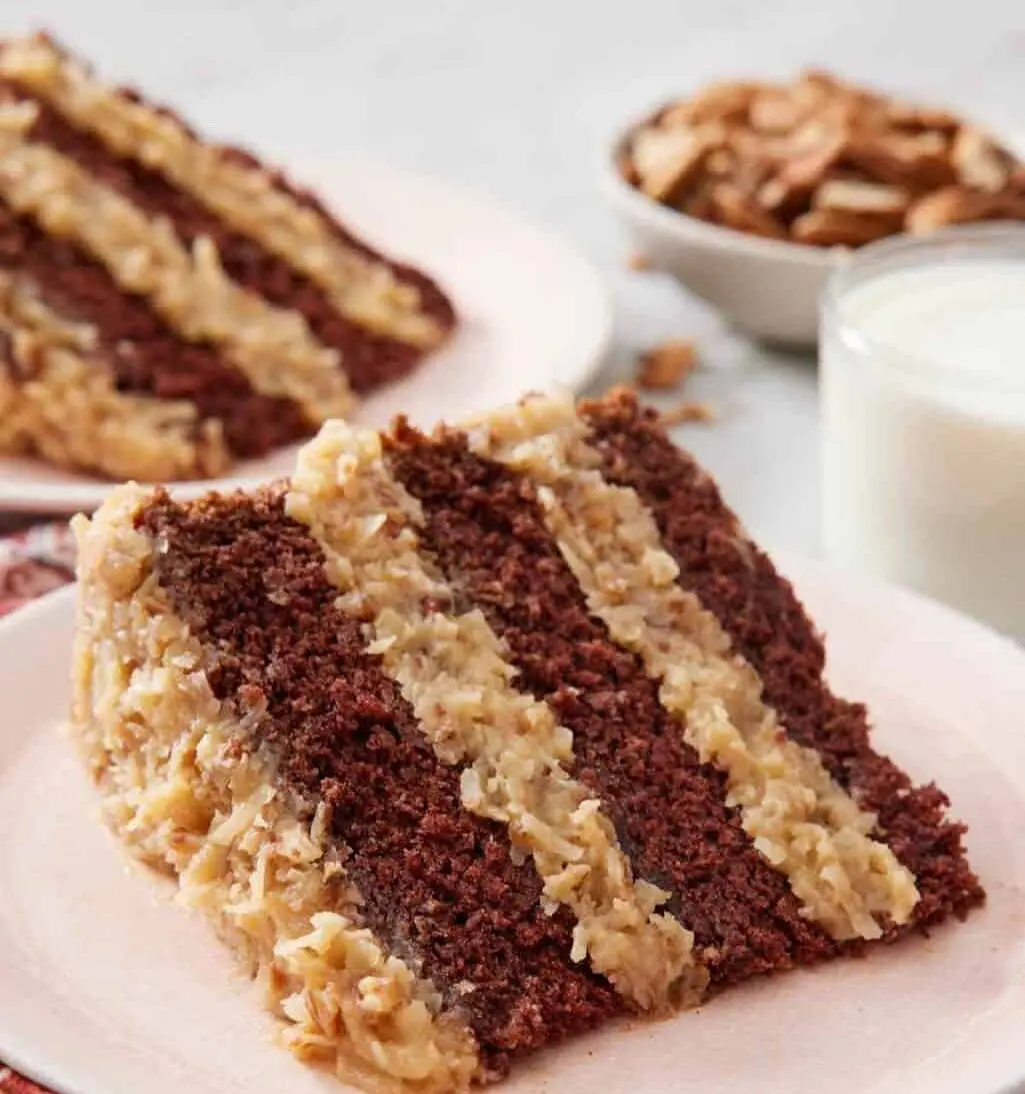
The best part? You don’t even need to chill it before serving. Slice and eat immediately – now that’s my kind of cake.
Let me walk you through this easy German chocolate cake recipe step by step, with all the tips I learned so you don’t make the same mistakes I did.
Why This German Chocolate Cake Recipe Works
Traditional German chocolate cake can be fussy. But this version simplifies everything without sacrificing that signature rich, nutty, coconutty flavor.
- One-bowl chocolate batter that comes together quickly
- DIY buttermilk – no need to buy a carton you’ll never finish
- Stovetop frosting that thickens perfectly in about 12 minutes
- No waiting – assemble and serve immediately
This German chocolate cake recipe uses simple techniques like folding in whipped egg whites to keep the cake light and airy, plus a double-boiler method for melting chocolate that prevents burning. Even if you’re new to layer cakes, you can nail this.
Watch the Original Video
All credit for this recipe goes to Whisk Takers on YouTube. Watch their original video below to see exactly how they make this beautiful cake.
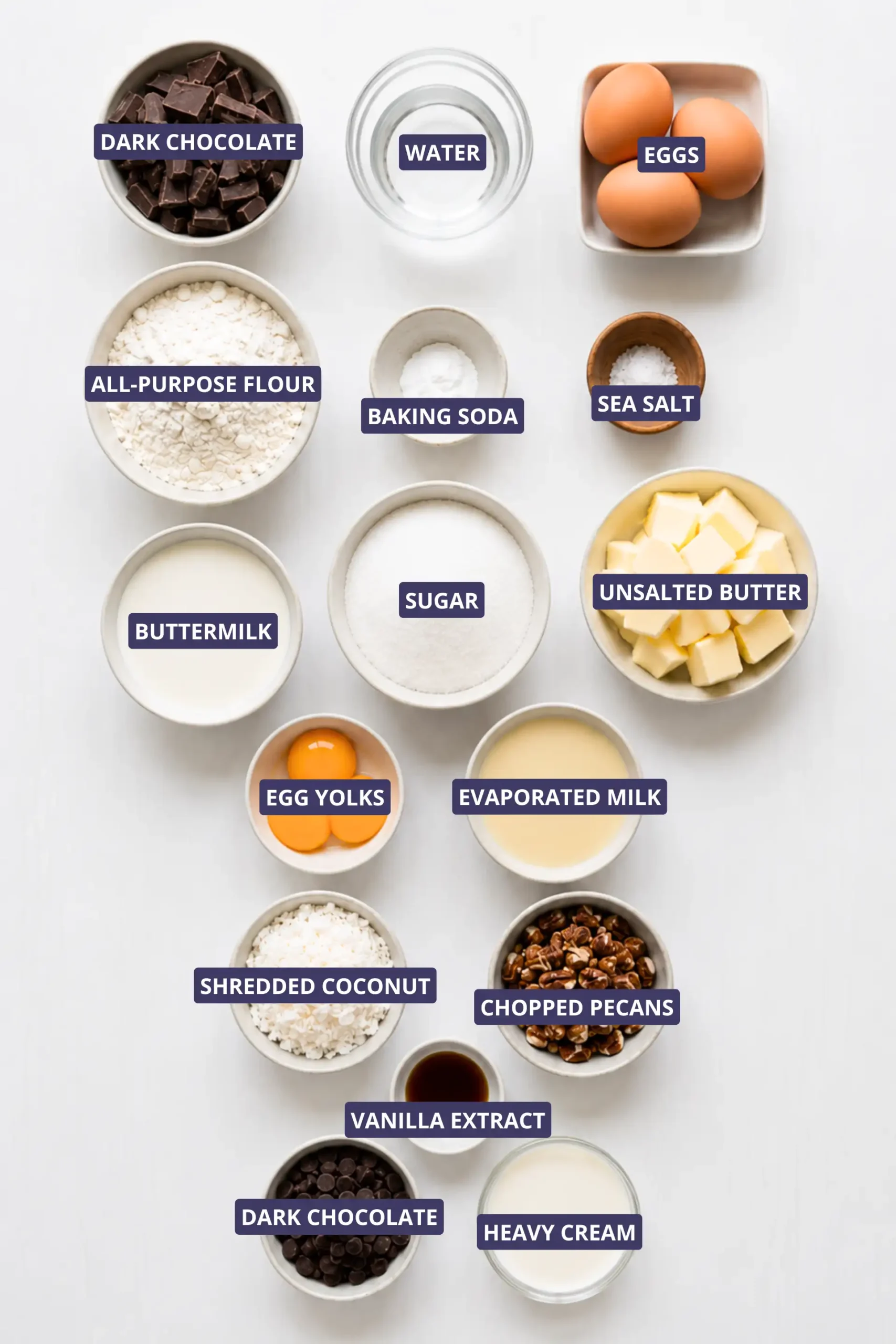
Ingredients for This Recipe
Makes one 8-inch or 9-inch two-layer cake
For the Chocolate Cake Layers
For the Coconut-Pecan Frosting
Optional Ganache for the Sides
Essential Tools for This Recipe
Having the right tools makes layer cakes infinitely easier. Here’s what I use:
- Two 8-inch or 9-inch Round Cake Pans – Light-colored metal pans bake most evenly. Dark pans can cause the edges to brown too quickly.
- Double Boiler (or a heatproof bowl + saucepan) – For melting chocolate without burning it.
- Electric Hand Mixer or Stand Mixer – You’ll need this for whipping egg whites and creaming butter.
- Silicone Spatula – Essential for folding egg whites and spreading frosting without scratching your pans.
Step-by-Step Instructions for the Best German Chocolate Cake Recipe
Step 1: Prep Your Pans and Oven
Preheat your oven to 175°C (350°F). Grease two 8-inch or 9-inch round cake pans with butter or non-stick spray, then line the bottoms with parchment paper. This guarantees your layers won’t stick.
Step 2: Separate the Eggs
You need 3 eggs. Separate them into yolks and whites:
- Whites go into a clean, dry bowl (preferably metal or glass – plastic can hold grease residue, which prevents whipping)
- Yolks go into another bowl for the frosting later
Let both come to room temperature while you prepare the other ingredients.
Step 3: Mix the Dry Ingredients
In a medium bowl, sift together:
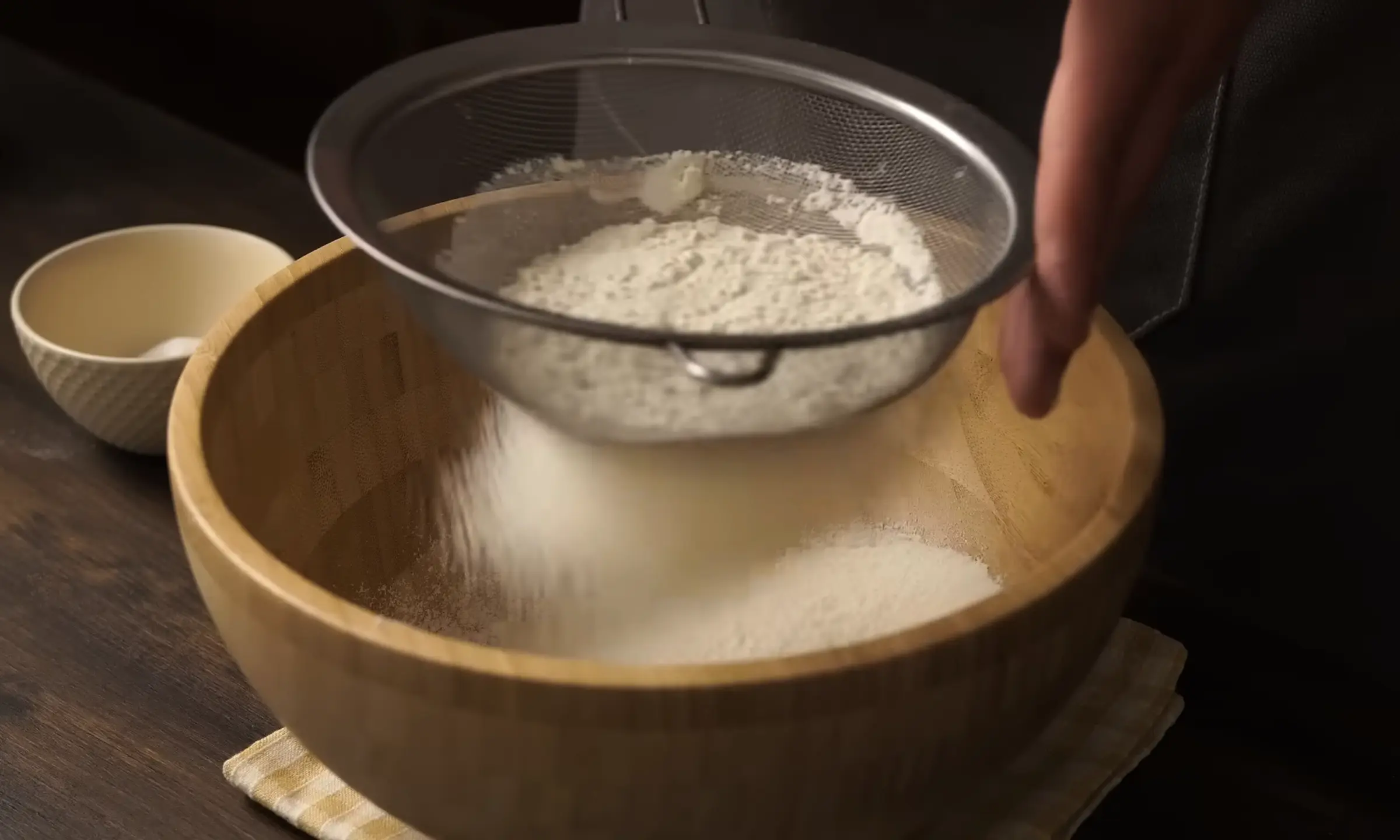
Sifting removes lumps and adds air. If you don’t have a sifter, whisk vigorously for 30 seconds. Set aside.
Step 4: Make DIY Buttermilk
In a small bowl or measuring cup, combine 160 ml (⅔ cup) milk with 2 teaspoons of lemon juice or white vinegar. Stir once, then let it sit for 5-10 minutes. It will look slightly thick and curdled – that’s perfect. Set aside.
Step 5: Melt the Chocolate
Break the 100g dark chocolate into small pieces and place it in a heatproof bowl. Add 80 ml (⅓ cup) of water.
Create a double boiler: Fill a small saucepan with about an inch of water and bring it to a simmer (not boiling). Place the bowl on top, making sure the bottom doesn’t touch the water.
Heat, stirring occasionally, until the chocolate is mostly melted. Then remove the bowl from the heat and stir until completely smooth and glossy. Set aside to cool slightly – it should be warm but not hot to the touch.
⚠️ Warning from my first attempt: Don’t overheat the chocolate. I got impatient and ended up with a grainy, lumpy mess. Low and slow is the way.
Step 6: Cream Butter, Yolks, and Sugar
In a large mixing bowl, beat 150g softened butter with an electric mixer on medium speed for 1-2 minutes until light and creamy. It should look pale and fluffy.
Add the 3 egg yolks one at a time, beating well after each addition. Scrape down the sides of the bowl with a spatula to make sure everything incorporates.
Gradually add 260g (1⅓ cups) granulated sugar – about ¼ cup at a time – beating on medium speed until the mixture is smooth and the sugar has mostly dissolved. This takes about 2 minutes.
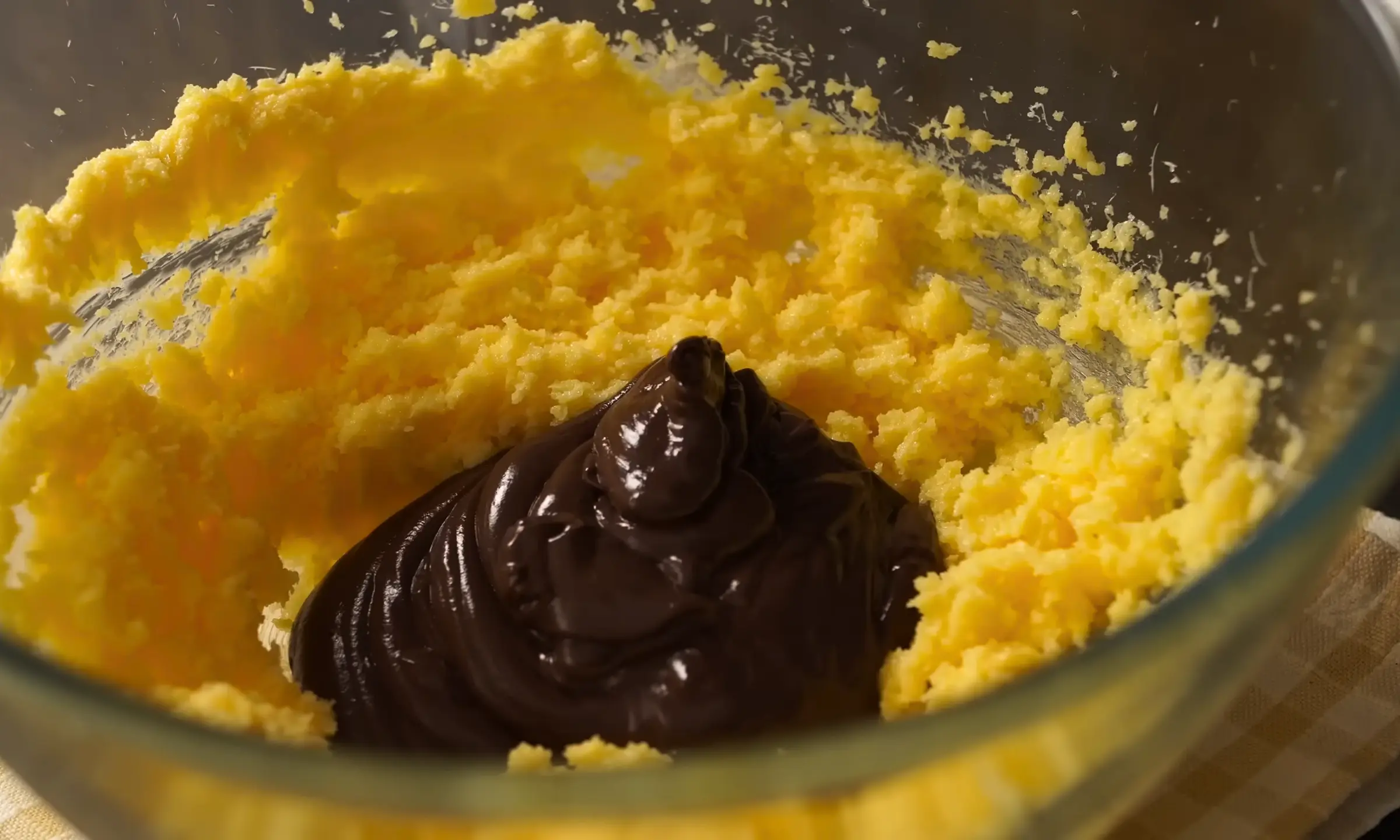
Step 7: Add the Melted Chocolate
Pour in the cooled melted chocolate. It should be warm but not hot. Beat on low until fully combined and the batter is a uniform dark brown.
Step 8: Alternate Adding Buttermilk and Dry Ingredients
This technique prevents lumps and keeps the batter smooth.
With the mixer on low speed, add half of the buttermilk (about 80 ml). Mix until just incorporated.
Add half of the dry flour mixture. Mix until just combined – don’t overmix.
Add the remaining buttermilk, then the remaining dry ingredients. Mix each time just until the flour disappears.
The batter will be thick, smooth, and gloriously chocolatey.
Related Post
Step 9: Whip the Egg Whites
This is the secret to a light, tender cake. Wash and dry your beaters thoroughly – any trace of yolk or grease will prevent the whites from whipping.
In a clean, dry bowl, beat the 3 egg whites with a pinch of salt. Start on low speed until they become foamy, then increase to medium-high.
Beat until soft peaks form – when you lift the beaters, the whites should curl into a gentle peak that droops slightly. (If you go to stiff peaks, that’s fine too, but soft peaks are easier to fold.)
Room temperature egg whites whip to a higher volume than cold ones. Patience pays off here.
Step 10: Fold the Egg Whites into the Batter
This step requires a gentle touch. Add about one-third of the whipped egg whites to the chocolate batter. Use a silicone spatula to cut down through the center, scrape along the bottom, and fold up over the top. Rotate the bowl and repeat until mostly combined.
Add the remaining egg whites in two more batches, folding gently each time. The goal is to incorporate the whites without deflating them. The final batter should be airy, voluminous, and cloud-like – not dense.
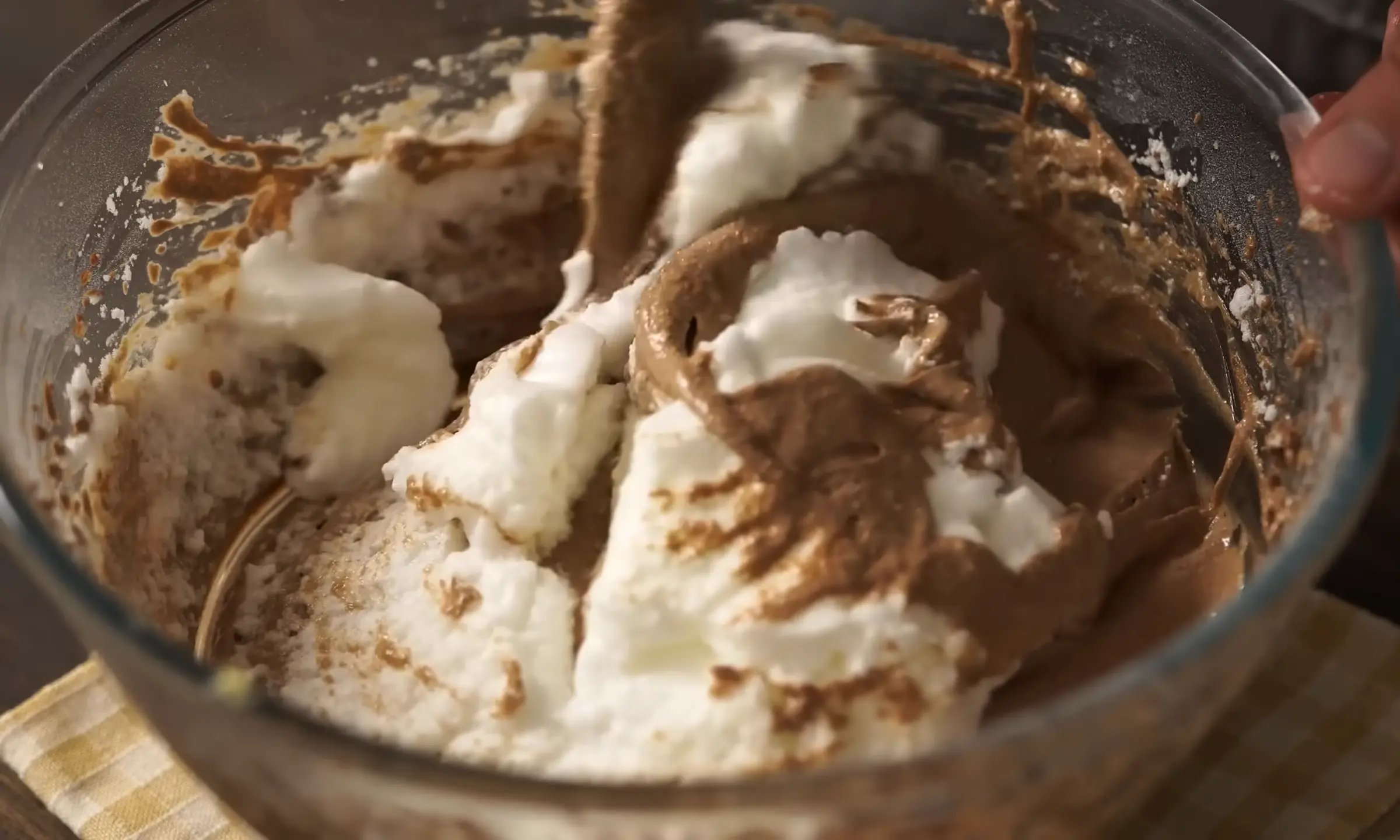
Do not use a mixer for this step. I know it’s tempting, but the mixer will knock out all that beautiful air you worked for.
Step 11: Bake the Cake Layers
Divide the batter evenly between your two prepared cake pans. Use the spatula to smooth the tops.
Bake at 175°C (350°F) for about 30 minutes, or until a toothpick inserted in the center comes out clean or with a few moist crumbs (not wet batter).
My oven runs hot, so I check at 25 minutes. Every oven is different.
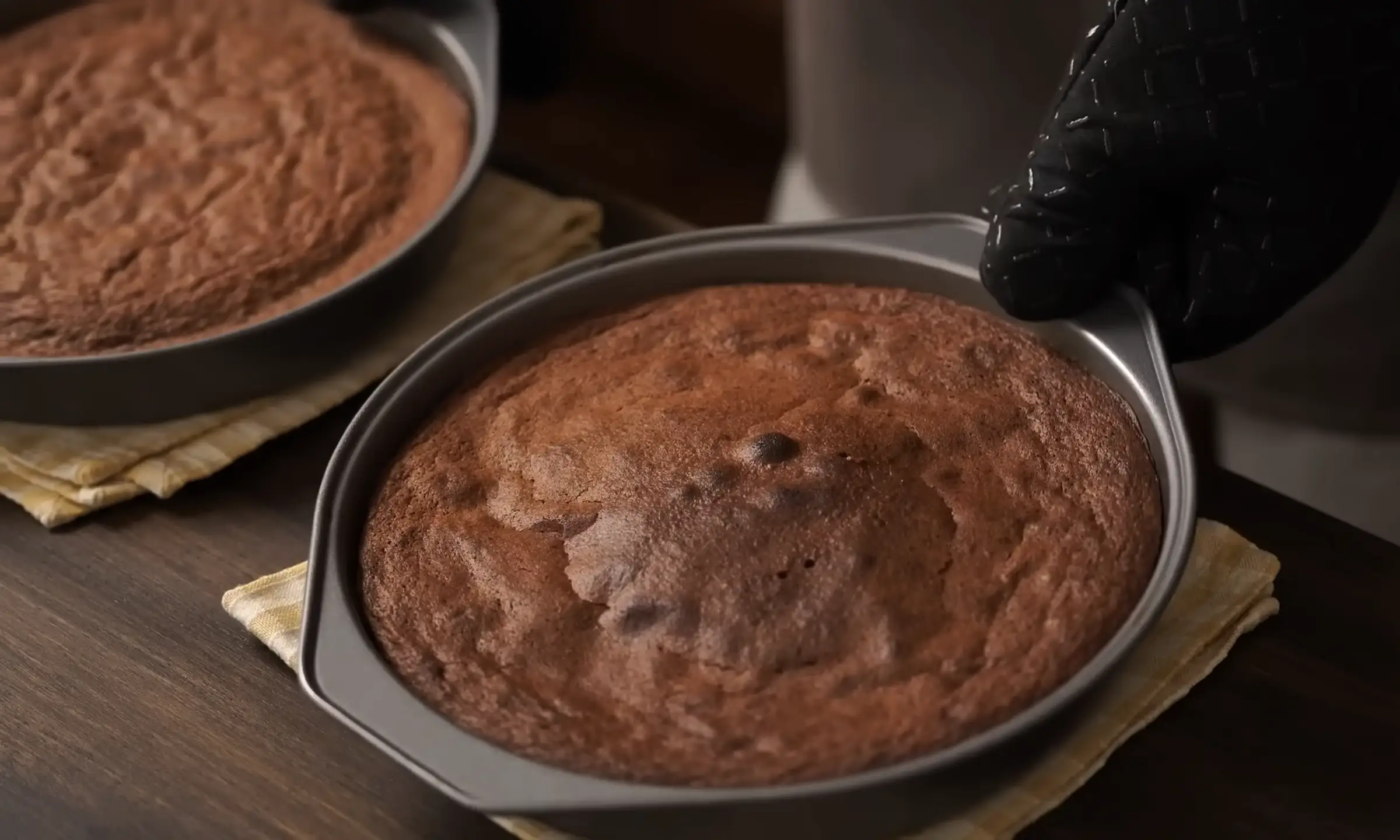
Let the cakes cool in the pans for 15 minutes. Then run a knife around the edges, invert onto a wire rack, and peel off the parchment paper. Let the layers cool completely while you make the frosting.
Step 12: Toast the Pecans
While the cakes bake, toast your pecans. You can do this on the stovetop or in the oven.
Stovetop method (faster): Place the pecans in a dry frying pan over medium heat. Stir constantly for about 5 minutes until they smell nutty and look slightly golden. Immediately transfer to a plate to cool – don’t leave them in the hot pan or they’ll keep cooking and might burn.
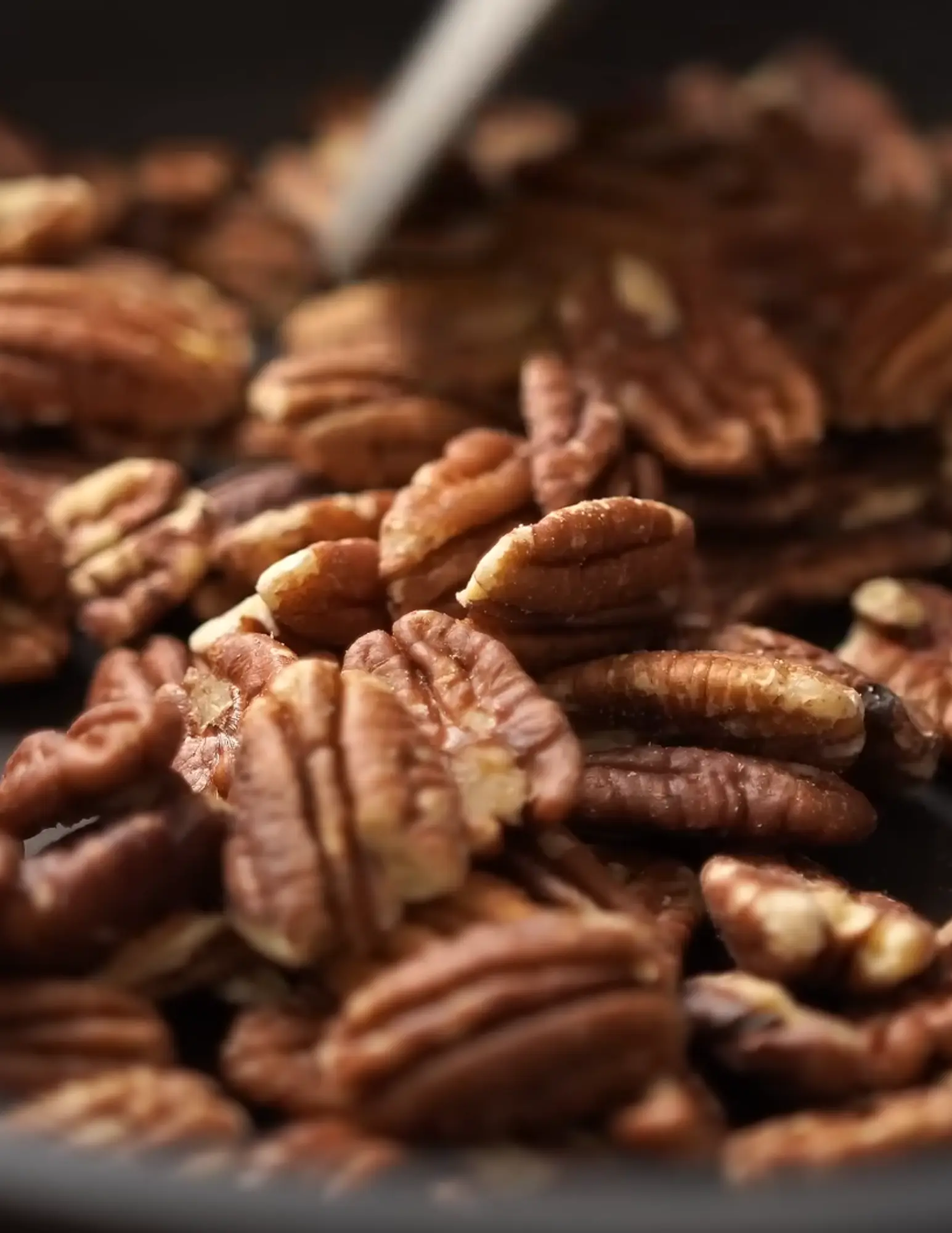
Oven method: Spread pecans on a baking sheet. Bake at 175°C (350°F) for 6-8 minutes, stirring once halfway through.
Once cooled, chop the pecans into small pieces (if you started with whole ones). Set aside.
Step 13: Make the Coconut-Pecan Frosting
This frosting is the signature of any German chocolate cake recipe. It’s cooked on the stovetop and transforms from a thin liquid into a thick, golden, candy-like filling.
In a medium saucepan (not non-stick – you want to see the color change), combine:
Whisk everything together until combined. Place the saucepan over medium heat.
Cook, stirring constantly with a spatula (not a whisk – it will clog with the coconut later), for about 12 minutes. The mixture will gradually thicken and turn a warm golden-caramel color.
You’ll know it’s ready when:
- It coats the back of a spatula
- You can draw a line through it with your finger, and the line holds
- It’s noticeably thicker, like a loose pudding
Remove from heat. Immediately stir in:
Mix well. The spatula is definitely easier than a whisk here – the whisk will get clogged with coconut. (I learned this the hard way, just like the video says.)
Let the frosting cool to room temperature. It will continue to thicken as it cools.
Step 14: Assemble the Cake
Place one cake layer on a serving plate or cake board. If the top is domed, use a serrated knife to level it off – but honestly, a slight dome is fine.
Spread about half of the coconut-pecan frosting evenly over the top. This frosting is thick and chunky, so don’t worry about making it perfectly smooth – rustic is beautiful here.
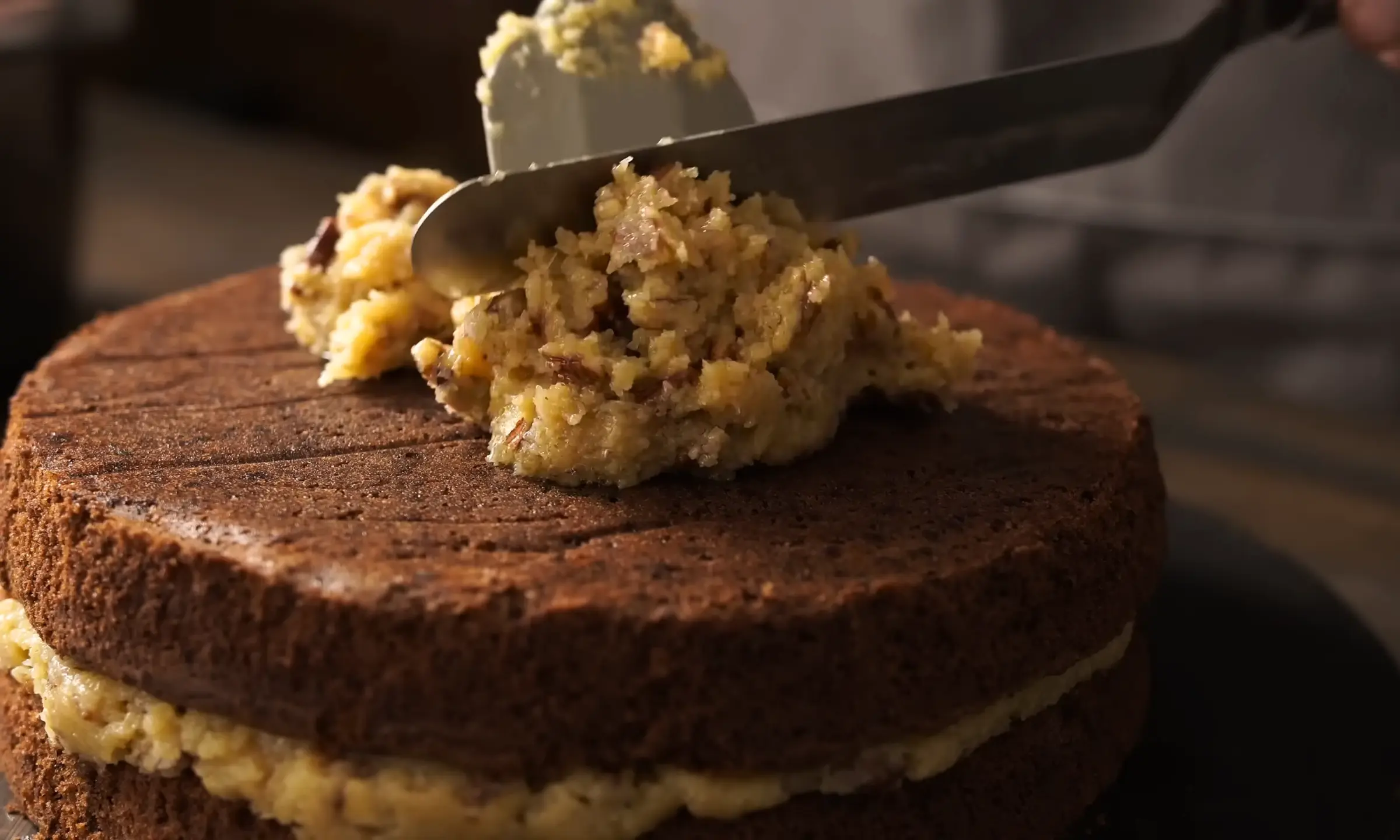
Place the second cake layer on top (peel off the parchment first!). Spread the remaining frosting over the top.
That’s it. Unlike many layer cakes, this German chocolate cake recipe doesn’t require refrigeration before serving. You can slice and enjoy immediately.
Step 15: Optional Ganache for the Sides
If you want to make the cake look extra special (like the one in the video), you can coat the sides with chocolate ganache.
To make the ganache:
- Chop 100g dark chocolate (70%) finely and place in a heatproof bowl.
- Heat 120 ml (½ cup) heavy cream in a small saucepan over medium heat until small bubbles form around the edges – do not boil.
- Pour the hot cream over the chopped chocolate. Let’s sit for 1 minute.
- Gently stir until smooth and glossy.
Let the ganache cool for 5-10 minutes until it thickens slightly but is still pourable. Then pour or spread it around the sides of the assembled cake. You can use a spatula or even a pastry brush.
Honestly? The cake is delicious without ganache. The coconut-pecan frosting is the star. But ganache adds a lovely contrast if you have extra chocolate lying around.
My Honest Review of This Recipe
Would I make it again? This German chocolate cake recipe is now my official birthday cake request. I’ve made it three times already – for my mom’s birthday, a potluck, and just because I needed something chocolatey. Every time, people ask for the recipe.
One thing I changed: The original video didn’t specify toasting the pecans. I added that step because raw pecans have a bitter edge. Toasting makes a world of difference.
Final verdict: A rich, authentic, deeply satisfying cake. Not difficult – just honest home baking. The German chocolate cake recipe you’ll make again and again.
4 Essential Tips for This Recipe
Tip #1: Room Temperature Ingredients Are Non-Negotiable
Cold eggs and butter won’t cream properly, and cold egg whites won’t whip to full volume. Set everything on the counter for 30-60 minutes before you start. If you’re in a hurry, place eggs in a bowl of warm water for 5 minutes.
Tip #2: Don’t Overmix After Adding Flour
Once flour touches liquid, gluten starts developing. Mix just until the streaks disappear. Overmixing = tough, dense cake. Trust me on this – I ruined my first batch by being overzealous with the mixer.
Tip #3: Watch the Frosting Like a Hawk
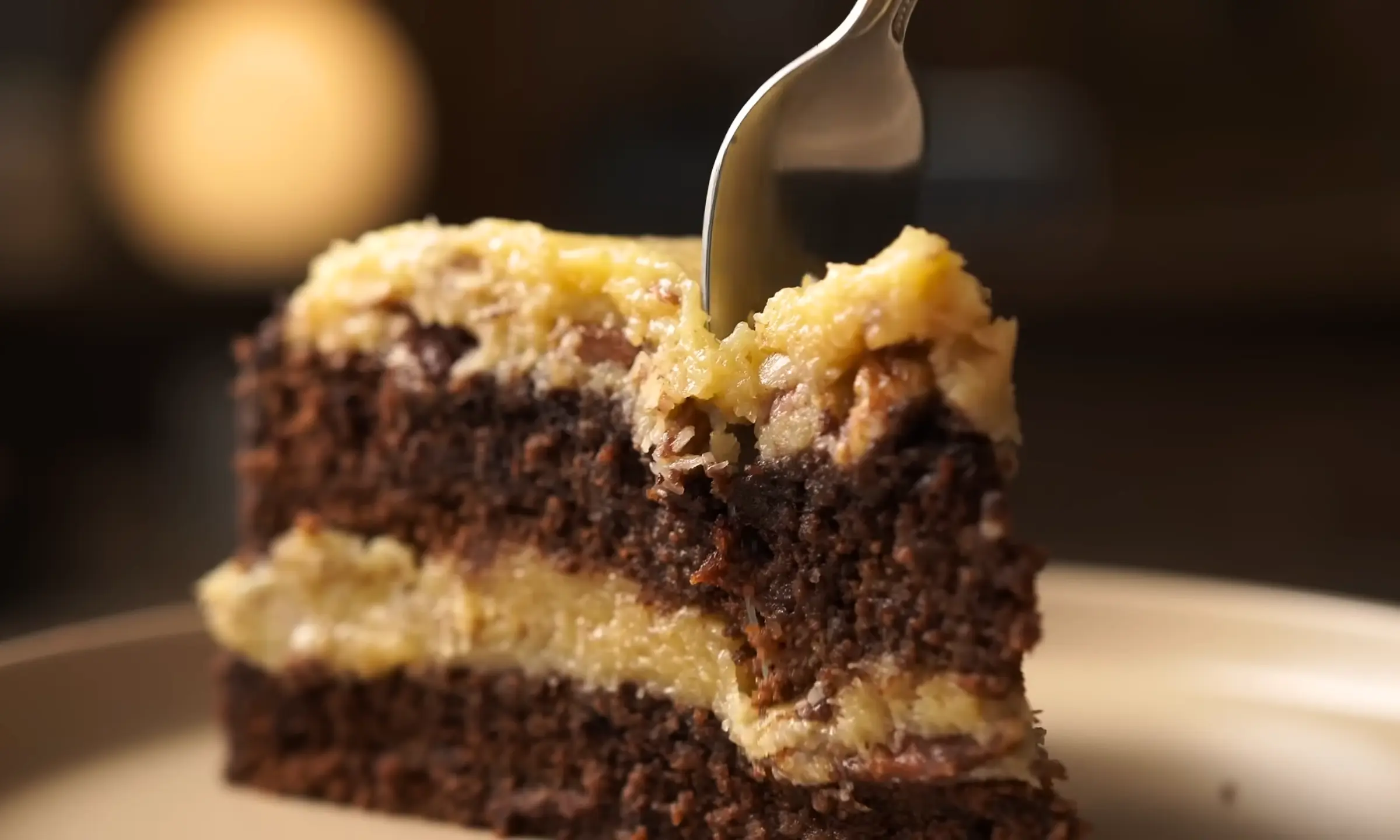
The coconut-pecan filling goes from too thin to perfect to scorched in about 2 minutes. Stir constantly and look for the color change to golden. It should be thick enough to leave a clear trail when you drag your spatula through the pan.
Tip #4: Cool the Cake Completely Before Assembling
Warm cake layers will melt the frosting and make it slide off. Let the cakes cool on wire racks until they’re room temperature – at least 1 hour. If you’re in a rush, you can speed things up by placing the layers in the refrigerator for 20 minutes.
German Chocolate Cake vs Regular Chocolate Cake: What’s the Difference?
Traditional German chocolate cake is defined by two things: the light, sweet chocolate cake (made with mild German’s sweet chocolate, not dark) and the coconut-pecan frosting. Over time, many recipes (including this one) have shifted to darker chocolate for a richer flavor.
And remember – it’s not German. It’s American. Named after Sam German. Now you can impress your friends with that trivia when you serve this cake.
German Chocolate Cake
INGREDIENTS
For the Chocolate Cake Layers
- 100 g Dark chocolate (50-70% cocoa)
- 80 ml Water
- 3 large eggs (separated)
- 160 g All-purpose flour
- ⅔ tsp Baking soda
- 1 pinch Fine sea salt
- 160 ml Buttermilk (or DIY: milk + lemon juice/vinegar)
- 150 g Unsalted butter (softened)
- 260 g Granulated sugar
For the Coconut-Pecan Frosting
- 3 egg yolks
- 240 ml Evaporated milk
- 200 g Granulated sugar
- 115 g Unsalted butter
- 130 g Shredded coconut (unsweetened)
- 130 g Chopped pecans (toasted)
- 1 tbsp Vanilla extract
Optional Ganache for the Sides
- 100 g Dark chocolate (70% cocoa)
- 120 ml Heavy cream (35% fat)
INSTRUCTIONS
For the Chocolate Cake Layers
- Preheat oven to 175°C (350°F). Grease two 8-inch or 9-inch round cake pans and line bottoms with parchment paper.
- Separate 3 eggs. Set yolks aside for frosting. Let whites and yolks come to room temperature.
- Sift together flour, baking soda, and salt in a bowl. Set aside.
- Make buttermilk: add 2 tsp lemon juice or vinegar to 160 ml milk. Let sit 5-10 minutes.
- Melt chocolate with 80 ml water in a double boiler. Stir until smooth. Cool slightly.
- Beat softened butter until creamy. Add egg yolks one at a time. Gradually add sugar, beating until smooth.
- Add melted chocolate to butter mixture. Beat until combined.
- Alternately add buttermilk and dry ingredients (half each), mixing just until combined after each addition.
- In a clean bowl, beat egg whites with a pinch of salt until soft peaks form.
- Fold whipped whites into the batter gently in three additions.
- Divide batter between prepared pans. Bake 30 minutes or until toothpick comes out clean. Cool in pans 15 minutes, then invert onto wire racks to cool completely.
For the Coconut-Pecan Frosting
- Toast pecans in a dry pan over medium heat until fragrant (about 5 minutes). Cool and chop.
- In a saucepan, combine egg yolks, evaporated milk, sugar, and butter. Cook over medium heat, stirring constantly, until thick and golden (about 12 minutes).
- Remove from heat. Stir in shredded coconut, chopped toasted pecans, and vanilla. Let cool to room temperature.
Optional Ganache for the Sides
- Chop dark chocolate finely and place in a bowl.
- Heat heavy cream until small bubbles form around edges. Pour over chocolate.
- Let sit 1 minute, then stir until smooth. Cool slightly until thickened but pourable.
Assembly
- Place one cake layer on a plate. Spread half of the frosting over the top.
- Top with second cake layer. Spread remaining frosting over the top.
- (Optional) Spread or pour ganache around the sides of the cake.
NOTES
Nutrition Information
Calories: 620 kcal | Protein: 9 g | Carbohydrates: 68 g | Fat: 36 g | Fiber: 4 | Cholesterol: 145 mg | Sodium: 220 mg | Calcium: 80 mg | Iron: 3 mg Note: Nutritional values are estimates and may vary based on specific ingredients used.There’s something deeply satisfying about pulling a homemade layer cake out of the oven, especially one as iconic as this. The way the coconut-pecan frosting bubbles and thickens on the stove, the way the chocolate batter fills your kitchen with that warm, dark aroma, the way the first slice reveals those tender, fudgy layers – it’s baking magic.
And the best part? You don’t need a special occasion. This German chocolate cake recipe is for Tuesday afternoons, for “I survived the week” celebrations, for any moment that calls for something truly delicious.
Related Post
I hope you’ll try it. And when you do, please come back and tell me how it went. Did the frosting thicken perfectly? Did the cake rise high and even? Did your family hover around the kitchen waiting for the first slice (mine does every single time)?
Drop a comment below with your questions, your wins, or your funny baking fails – we’ve all had them.
Recipe credit:
This German chocolate cake recipe is adapted from Whisk Takers on YouTube. Thank you for sharing your detailed, honest approach to baking. Watch their original video for a visual walkthrough of the entire process.